
IFA Water Damage Restoration in Teaneck: A Homeowner’s Guide
IFA water damage restoration in Teaneck follows the standards set by the International Floodplain Association for reading water damage correctly before, during, and after cleanup. Most homeowners in Teaneck call us after the visible water is gone and assume the problem is solved, but IFA-trained restoration work treats the moisture you can’t see as the actual job. If you’d rather not sort through drying standards and equipment specs yourself, call (551) 365-4026 and we’ll walk you through what your home actually needs.
Reading the Floodline: What That Stain Is Actually Telling You
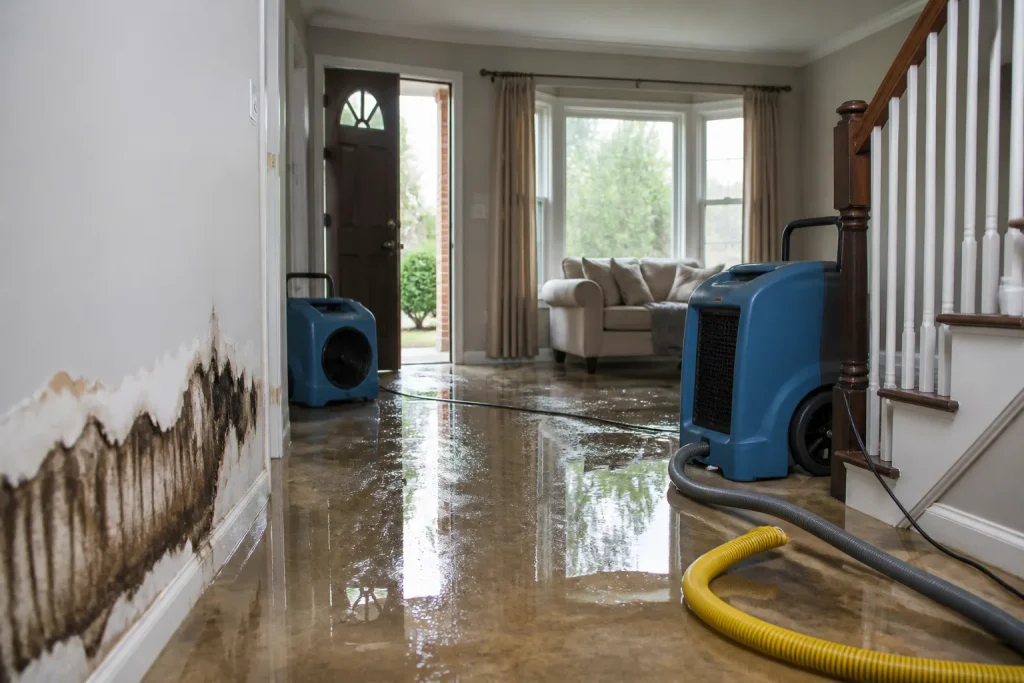
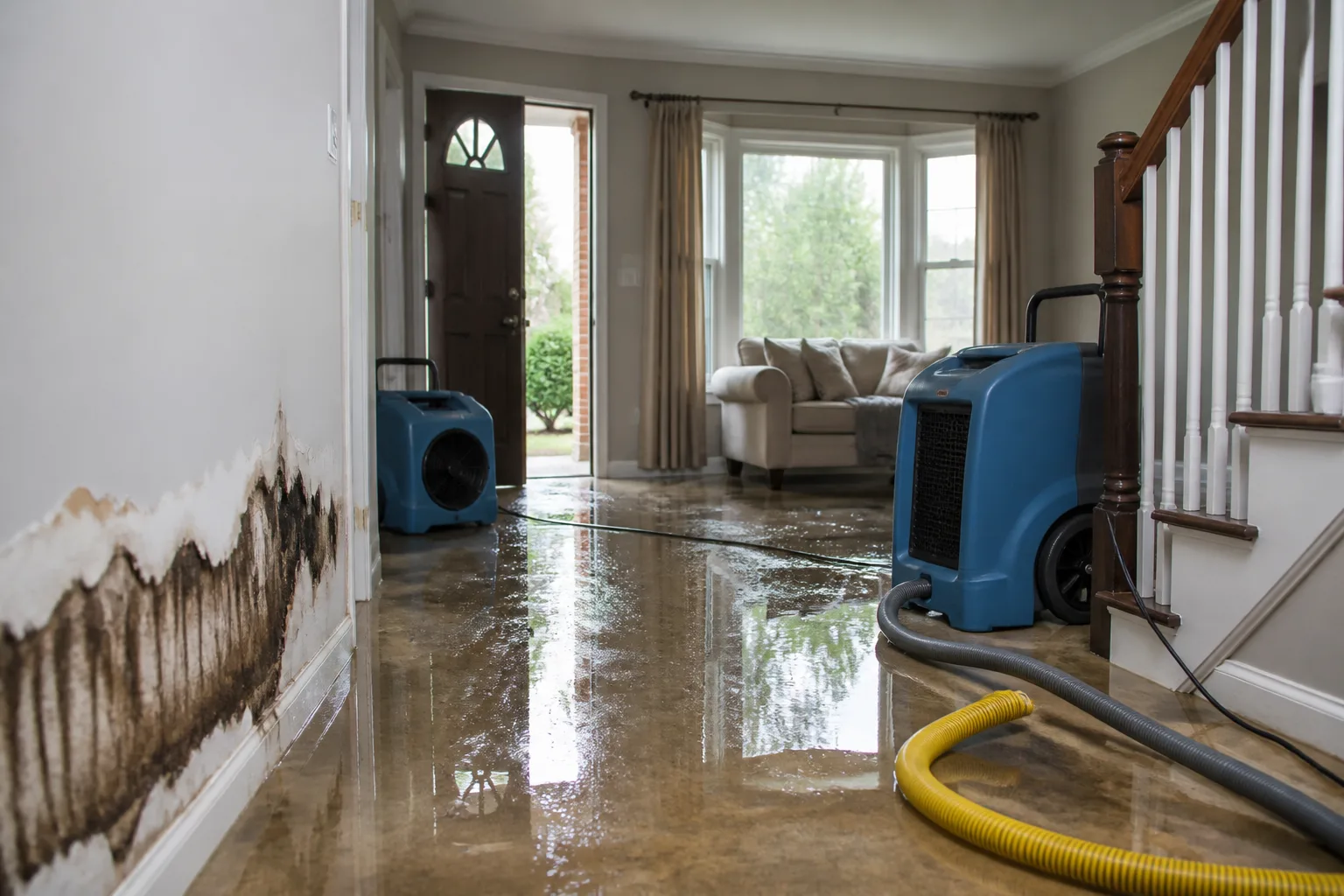
The floodline on your wall is the water you can see. Industry moisture data consistently shows the hidden saturation zone extends 12-18 inches beyond that visible mark, and that’s where mold colonies establish within 48-72 hours. That stain isn’t a finish line. It’s a starting point.
In Teaneck homes, the floodline itself carries diagnostic information if you know how to read it. A single dark band at one height usually means clean water rose and receded slowly. Multiple tide marks stacked like rings on a bathtub tell a different story: repeated wetting cycles, each one pushing contaminants deeper into the drywall and framing. Efflorescence, the white chalky crust you sometimes see on basement block walls, means water has been moving through masonry for weeks or months, not days. None of these are cosmetic issues.
We start every Water Damage Restoration in Teaneck job by reading that line before touching any equipment. The stain color, the height, the texture of the drywall above and below it, all feed into the drying plan. In houses over by Votee Park where the mid-century basements sit on slab foundations, we frequently see floodlines that look minor on the surface but trace back to water that traveled under the slab and wicked up through the sill plate. The visible mark is the tip of it.
Teaneck-Specific Risk Factors: Clay Laterals, Overpeck Creek, and Slab Construction
Teaneck has a particular set of water risks that a generic restoration checklist won’t catch. The township’s older neighborhoods, especially the streets east of Teaneck Road, sit on aging clay sewer laterals. Clay pipe joints fail slowly over decades. Roots find the gaps. When a line backs up during a heavy rain, the water that comes up through a floor drain is category 3, carrying sewage. That changes the entire restoration sequence, because category 3 requires containment, antimicrobial treatment, and removal of porous materials rather than simple drying.
The Overpeck Creek floodplain is the second factor. Homes west of the creek, along Windsor Road and down toward Cedar Lane, sit on soils that hold water long after the creek recedes. We’ve pulled saturated baseboards out of basements in the West Englewood section days after a storm passed, with homeowners insisting the water never touched them. It did. It just came up through the slab instead of over the windowsill.
And then there’s the construction itself. Much of Teaneck’s housing stock was built between 1940 and 1970, when basements were framed with wood studs directly against block or poured concrete. No vapor barrier, no capillary break. When groundwater presses against that foundation wall, the studs absorb it like wicks. A moisture meter reading on the drywall might show 15% moisture content while the stud behind it reads 28%. IFA standards require checking both. Skipping the cavity check is how you get mold six months after a “complete” drying job.
What IFA Standards Actually Require: The Sequence That Cannot Be Reordered
The IFA restoration sequence exists because water damage follows a physical timeline. Extraction comes first. Structural drying comes second. Rebuild comes third. When a contractor reorders those steps, the homeowner pays for it twice.
Here’s what the sequence looks like in practice, and what goes wrong when it’s skipped:
- Extraction: Standing water is removed with truck-mounted extraction units or portable Dri-Eaz units in smaller spaces. Skipping thorough extraction means the drying phase takes days longer, because the equipment has to evaporate water that should have been vacuumed out. In Teaneck basements where water pooled to half an inch across a 600-square-foot slab, that’s hundreds of gallons the homeowner pays to dry electrically instead of remove mechanically.
- Structural drying: Air movers and dehumidifiers are placed according to a moisture map, not guesswork. Phoenix and XPOWER units are our standard for this phase. Daily psychrometric readings track temperature, relative humidity, and grains per pound of moisture in the air. The dry standard is a number, not a feeling. If the numbers aren’t moving toward that standard, the drying plan changes.
- Rebuild: Only after the moisture log shows the structure has reached the dry standard does any reconstruction begin. Drywall, insulation, flooring, baseboards, all go back in after the drying is verified, not before. In homes over by the Glenpointe area where we’ve handled slab leaks, we routinely see previous “repairs” that were drywall-over-wet-framing jobs. The mold was sealed in, not removed.
We train our technicians to IICRC, RIA, and IFA standards because each body focuses on a different part of the job. IICRC covers the how of water damage restoration. RIA covers the advanced structural drying science. IFA brings the floodplain awareness specific to towns like Teaneck that sit near creeks, rivers, and aging infrastructure. A technician who only knows one of them misses things the other two would catch.
The Moisture Log: What It Looks Like and How to Read It
A legitimate moisture log is a daily record of psychrometric readings taken at specific locations throughout the affected area. If you’re in Teaneck and a restoration crew can’t hand you a written log, you’re not getting verified drying. You’re getting a fan pointed at a wall.
Here’s what the log should include, and what each number means for your home:
- Moisture content readings for wood and drywall at each monitoring point, taken with a penetrating or non-penetrating meter. Wood that started at 28% should drop steadily toward 12-14% over the drying period. Drywall should settle around 8-10%.
- Relative humidity inside the affected space, measured daily. It should trend downward as the dehumidifiers do their work. A jump back up means water is still entering, or a drying chamber was opened too early.
- Grains per pound (GPP) readings that show the actual moisture load in the air. This is the number technicians watch, because relative humidity lies when temperatures fluctuate.
- Equipment placement notes showing where each air mover and dehumidifier is positioned, so you can confirm the plan matches the moisture map.
In our experience in Teaneck, homeowners who ask for the log get better outcomes than those who don’t, partly because the log creates accountability and partly because it forces the crew to actually read the numbers. We hand the log to the homeowner and the insurance carrier at the end of the job. It’s not a secret document. It’s the proof the drying happened.
The One Document You Need Before Any Crew Leaves
The moisture clearance certificate is the single document a homeowner should have in hand before any restoration crew packs up. It’s not a verbal “all clear.” It’s a written statement that the affected materials have reached the dry standard agreed upon at the start of the job, signed by the technician who took the final readings.
This matters in Teaneck for a specific reason: insurance claims. When a carrier reviews a water damage claim, they want documentation that the drying was completed to an accepted standard. A verbal assurance doesn’t hold up. A signed clearance certificate with the final moisture readings attached does. Without it, a homeowner can find themselves fighting a supplemental claim six months later when mold appears behind a wall, with no paper trail proving the drying was ever verified.
At Floodline Restoration Co., the clearance certificate is part of our standard closeout package, and it’s backed by the 90-Day Done Right Promise. If something isn’t right after we leave, we make it right. In writing. No arguing. That’s the Keystone Standard, and it applies to every water job we run in this township.
Related services in Teaneck: If your water damage came with visible mold growth, read our Mold Remediation in Teaneck guide. If the water came from a fire suppression system or the damage started with smoke, see Fire & Smoke Damage Restoration in Teaneck for the sequence we follow there.
The Bottom Line
Water damage in Teaneck follows a pattern: the floodline is the visible symptom, the hidden saturation zone is the actual problem, and the drying log is how you know the problem got solved. IFA standards give homeowners a framework for verifying the work, but they only help if the restoration company follows them. Ask for the moisture log daily. Ask for the clearance certificate at the end. If the answer to either request is vague, find another company.
If you’re in Teaneck and need help, Floodline Restoration Co. offers free estimates, direct insurance billing, and a 90-Day Done Right Promise in writing. We answer the phone at 2 a.m. with a live person. Call (551) 365-4026 and tell us what the floodline looks like. We’ll take it from there.
Frequently Asked Questions
Water damage restoration in Teaneck typically runs $2,500-$7,000 for a standard basement extraction and drying job, depending on square footage, water category, and how long the water sat before extraction began. Sewage backups and category 3 jobs add containment and antimicrobial costs. The most accurate way to price your specific damage is a free on-site estimate. Call (551) 365-4026 and we’ll give you a number before any work starts.
Most Teaneck homeowner policies cover sudden and accidental water damage, like a burst pipe or a washing machine supply line failure. Gradual damage from a leak that’s been running for months is usually excluded. We bill carriers directly and provide photo documentation of every phase, so you’re never the messenger between us and the adjuster. If you’re unsure whether your specific situation is covered, call (551) 365-4026 and we’ll help you work through the policy language.
We dispatch certified crews throughout Teaneck every day, including nights and weekends, and a live person answers the phone at all hours. In most cases, we have a crew on site the same visit, with extraction equipment running before the end of that first visit. Faster extraction means less structural damage and a shorter drying timeline. Call (551) 365-4026 and our dispatcher will tell you exactly when a crew can reach your street.
Fans move air over surfaces, but they don’t remove the moisture trapped inside wall cavities, under subflooring, or in the sill plates along the foundation. In Teaneck’s slab-and-block basements, that trapped moisture is where mold establishes within 48-72 hours. A $50 box fan feels like savings until the mold remediation costs four times what proper drying would have. A moisture meter will tell you the truth. We’ll bring one and check. Estimates are free, so call (551) 365-4026 and our technicians will show you the actual readings before recommending any work.
Written by Curt Bowman, Owner at Floodline Restoration Co., serving Teaneck since 2010.
Need Damage Restoration Help?
Call Floodline Restoration Co. - licensed & insured, available 24/7 in Teaneck.
(551) 365-4026