
Last updated August 25, 2026
Free visual inspection and a written scope of work before any mitigation begins - photos, moisture readings, and drying logs go in your claim file
The scope we write is the scope we bill. Anything new gets shown to you, in writing, before we touch it.



 Before
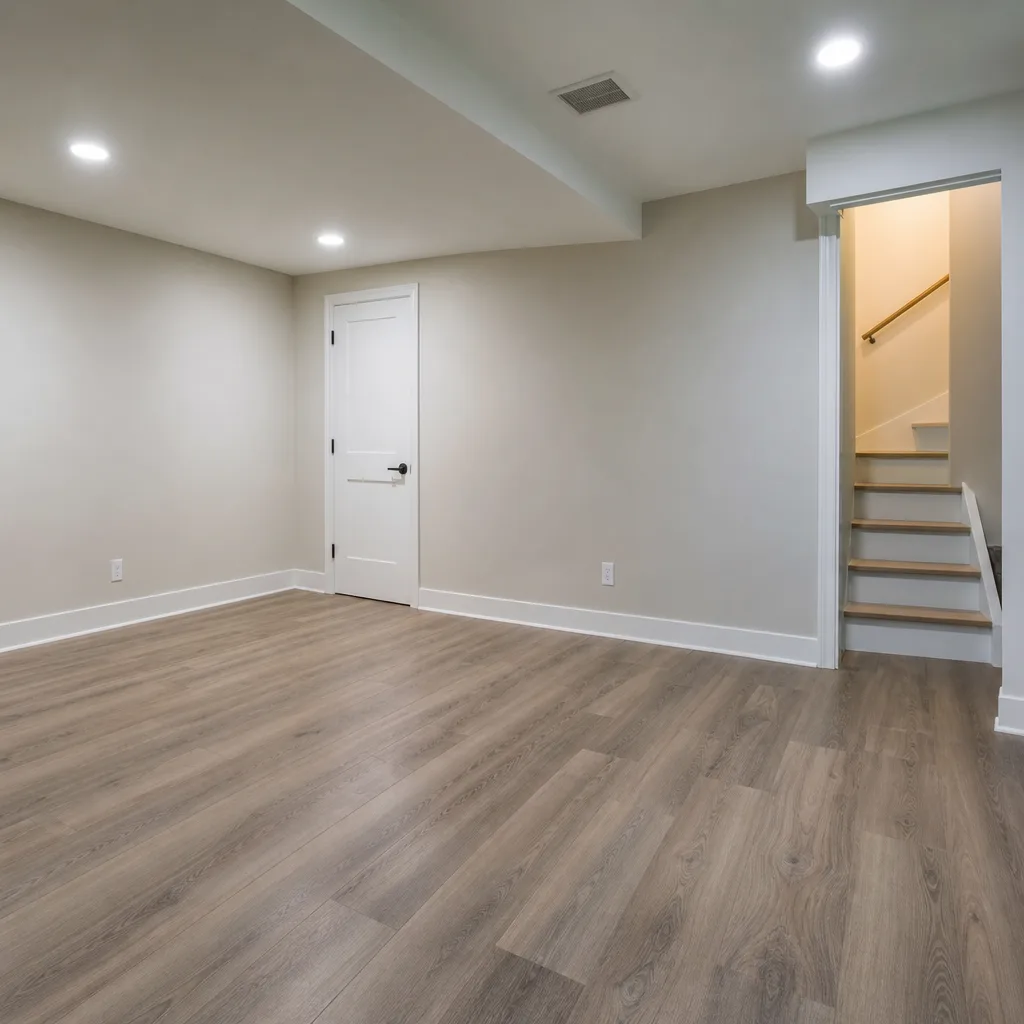 After
After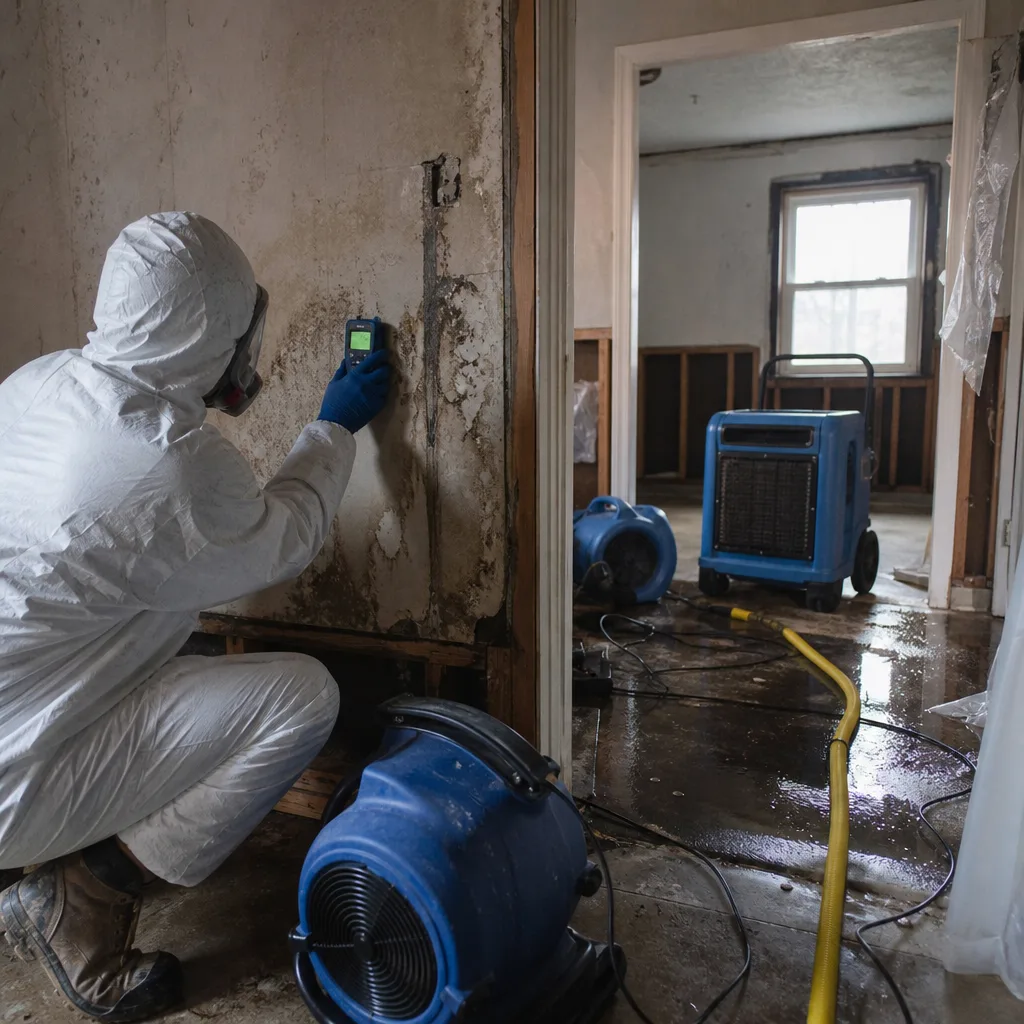 Before
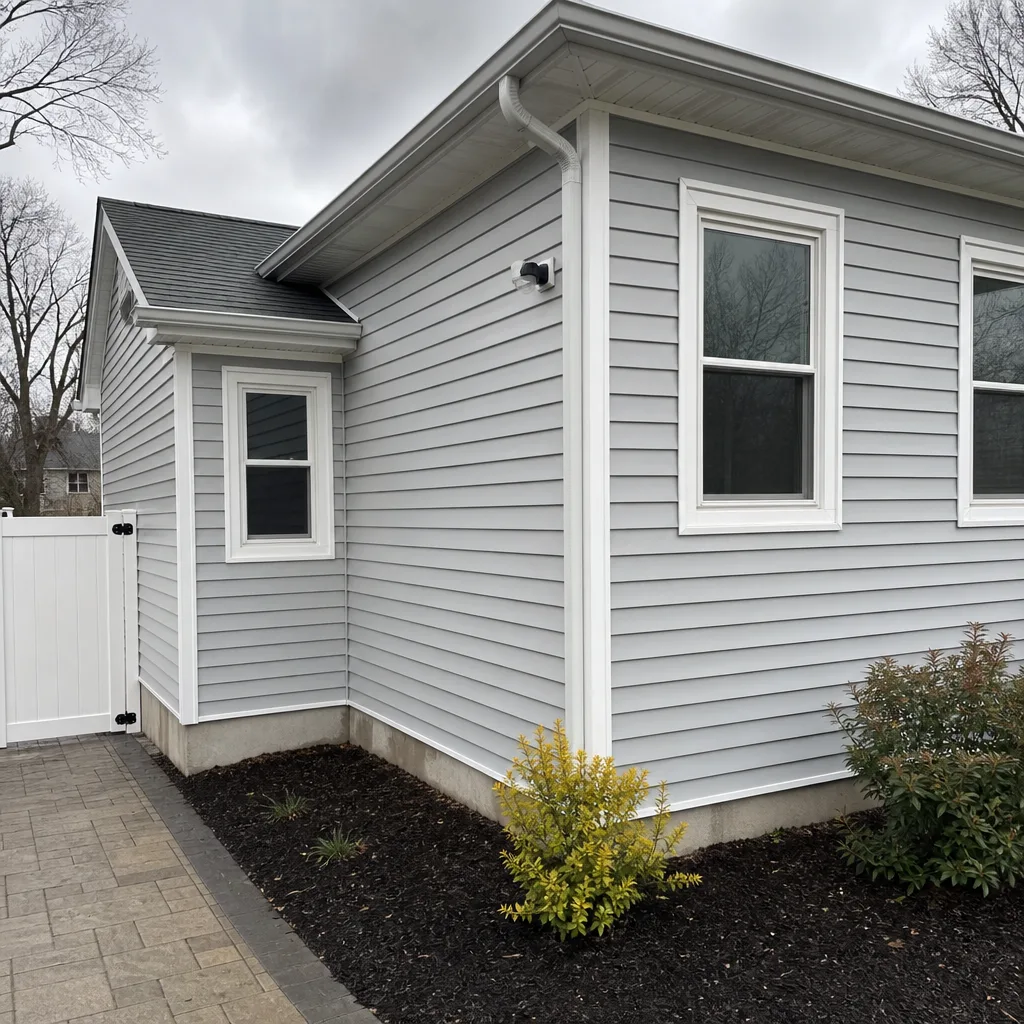 After
After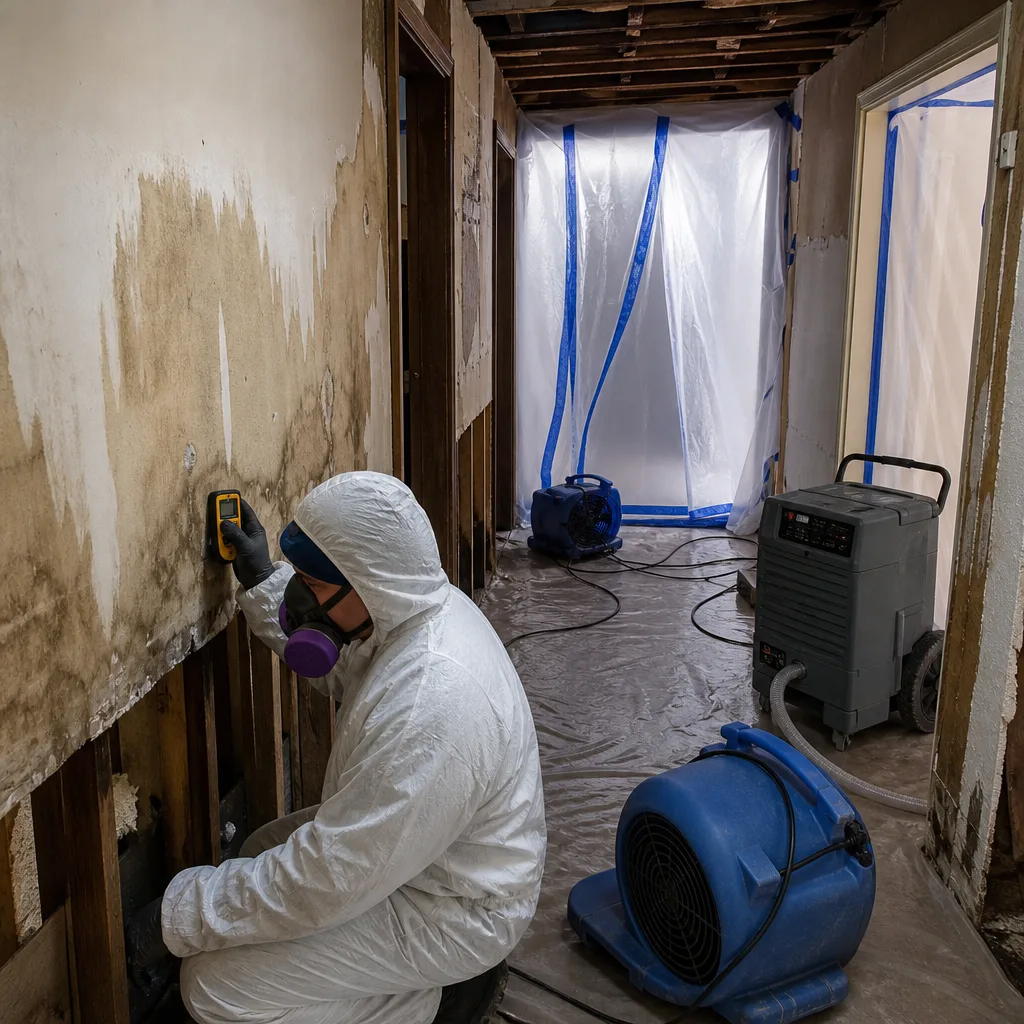 Before
 After
AfterDIY vs Professional Damage Restoration: The Teaneck Homeowner’s Decision Guide
Every year, Teaneck homeowners tear out drywall, rent fans from a big-box store, and think they’ve handled the water. Six months later, the musty smell comes back. Or worse, a floor joist has been quietly rotting behind the baseboard the whole time. This guide is for the homeowner standing in a wet basement on a Tuesday night, holding a shop vac, weighing whether to keep going or pick up the phone. We’ll walk through what actually happens when water, fire, or mold hits a Teaneck house, what a homeowner can reasonably do with their own hands, and where the line is where doing it yourself starts to cost more than calling in a crew.
Quick Answer
For clean water from a burst supply line in a small, contained area, a capable Teaneck homeowner can often handle extraction and drying on their own. But for sewage, mold beyond surface staining, water that has soaked into walls or under flooring, or any fire or storm damage that affected the structure, professional restoration pays for itself, and doing it yourself usually makes the claim smaller and the repair bigger. The honest rule: if the water has touched anything besides concrete and tile, the damage is already beyond what a shop vac and a box fan can fix.
Table of Contents
- Water Damage: When a Shop Vac Is Enough (and When It Isn’t)
- Mold Remediation: The Part You Can’t See Is the Part That Hurts You
- Fire and Smoke Damage: Why a Bucket of TSP Is Not a Restoration Plan
- Sewage and Storm Water: The Hazard Category That Changes Everything
- What Does Professional Restoration Actually Cost in Teaneck?
- How Insurance Billing Really Works (and Why DIY Can Hurt Your Claim)
- The Equipment Gap: What the Pros Run That You Can’t Rent
- Common Mistakes to Avoid
- When to Call a Professional
- Frequently Asked Questions
- The Bottom Line
Water Damage: When a Shop Vac Is Enough (and When It Isn’t)
Let’s start with the scenario most Teaneck homeowners face at least once: a water heater lets go, a supply line bursts under the sink, or a heavy rain finds a crack in the foundation. Clean water, one room, no sewage. On paper, that’s the DIY-solvable case.
Here’s the honest math. If the water is from a supply line (not a drain), the affected area is under about 40 square feet, the flooring is tile or concrete, and you catch it within the first hour, a homeowner with a wet vac, towels, and a couple of strong fans can often fully dry the space. We’ve seen it done. The key word is fully. Surface dry is not dry. The moisture has to be gone from the air, the slab, the drywall, the baseboards, and the air cavities behind and under everything. That’s where the DIY approach quietly fails.
Water in Teaneck behaves a particular way. The housing stock here leans older - a lot of colonials and split-levels from the 1950s through the 1970s. Those houses have plaster and lath in some rooms, gypsum board in others, and hardwood over diagonal subfloor in most. Water travels down and sideways along the subfloor, wicks up the plaster, and pools in the joist bays. You won’t see it. You’ll see a stain on the ceiling, but the actual water is spread across a much larger hidden area.
In our experience, the most expensive DIY water job we’ve ever walked into started as a refrigerator supply line leak in the kitchen. The homeowner mopped it up, set up a rented carpet fan, and called it done. Eight months later, the hardwood in the dining room, one room over, started cupping. The water had run under the kitchen floor, along the subfloor, and into the dining room. By the time we opened the floor, the joists needed sistering. The original dry-out would have cost a few hundred dollars through insurance. The rebuild was several thousand.
So the decision rule for water is this:
- DIY is reasonable if: the water is clean (supply line, not drain), the square footage is small, the floor is concrete or tile, you are present when it happens, and you can get the whole area fully dried within 48 hours.
- Call a pro if: the water has touched drywall, plaster, hardwood, carpet, or baseboards; the leak was hidden or slow; the water came from a drain or the outside; the room smells damp after drying; or more than 40 square feet is wet.
One Teaneck-specific note: many basements here are below the water table, which means the slab is wet even before a leak. If your basement floor seeps after heavy rain, you have a grading or drainage condition that will never be solved by drying out the symptom. That’s a whole different planning conversation.
Mold Remediation: The Part You Can’t See Is the Part That Hurts You
Mold is where the DIY decision carries the most risk, for two reasons. First, what you see on the surface is typically a fraction of the colony - the rest is in the wall cavity, under the floor, or in the insulation. Second, disturbing mold without containment sends the spores airborne into the rest of the house. A homeowner who scrubs a moldy closet wall with bleach has often just spread the problem from one room to four.
The science matters here. Mold grows wherever moisture has sat for 48 to 72 hours. In Teaneck’s late-summer humidity, that window shortens. A basement that got damp from a July storm and wasn’t fully dried can show visible mold within a matter of days. Once mold is established, killing the visible growth doesn’t address the root water source or the hidden growth. It comes back. It always comes back.
There is a small set of cases where DIY mold cleanup is defensible, and it’s almost entirely limited to non-porous surfaces: mold on a concrete foundation wall, mold on tile grout, mold on a glass block window. Those are surfaces where bleach or a commercial fungicide can actually reach the colony. For those, the process is: fix the water source, clean the mold with an appropriate product, dry the area completely, and monitor.
But the moment mold is on drywall, plaster, wood, insulation, or carpet, the material has to come out. You cannot “clean” mold from gypsum board. The mold has penetrated the paper facing and the gypsum core. Scraping and painting over it is a temporary cosmetic fix over an active biological problem. We’ve removed moldy drywall from a Teaneck kitchen that had been painted over twice by a previous owner. The mold had continued spreading behind the paint, undetected, for years.
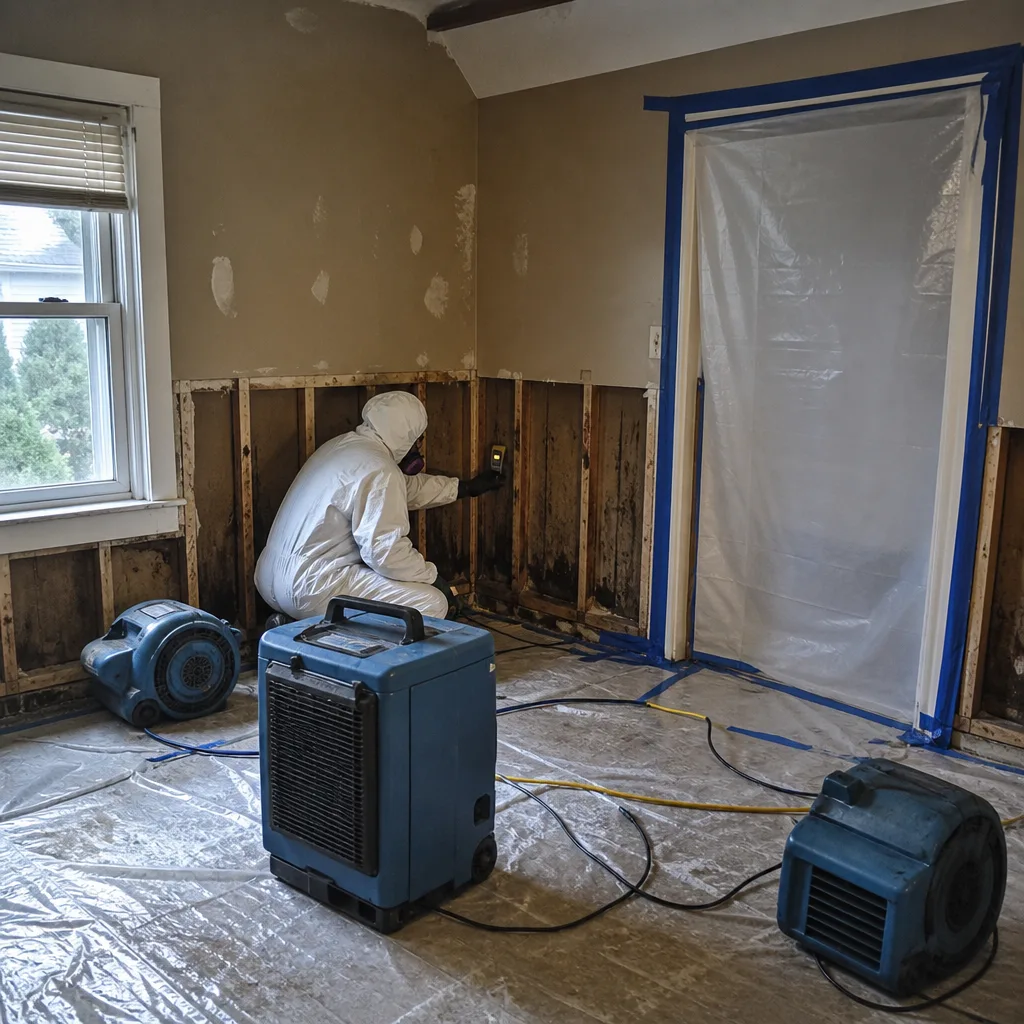
There’s also a ventilation issue. In a 1950s colonial with original windows and no mechanical ventilation, a do-it-yourself mold scrub releases spores into a house that doesn’t have the air movement to clear them. Professional remediation uses negative air machines and containments, not because it looks impressive, but because it actually isolates the work area from the living space.
The safety caveat here is direct: if you have asthma, allergies, any respiratory condition, or a compromised immune system, do not attempt to disturb mold growth yourself. The health risk is not theoretical. A certified remediation technician wears a respirator and tyvek suit on these jobs for a reason.
Fire and Smoke Damage: Why a Bucket of TSP Is Not a Restoration Plan
Fire damage is the category where a homeowner’s instinct to help is strongest and the risk of doing real harm is highest. The fire is out. The smoke is gone. The visible char is small. It feels like something you can scrub off with the right cleaner. But smoke damage is almost never what it looks like.
Smoke is not a stain. It’s a chemical residue made up of combustion byproducts, and the exact cocktail depends on what burned. A kitchen grease fire leaves a thick, waxy residue that embeds in every porous surface. A furnace puffback leaves a fine, oily soot that drifts into closets, ductwork, and behind cabinets. Synthetic materials - carpet, vinyl, foam - produce acidic soot that etches metal and permanently destroys finishes if not handled quickly and correctly.
The other reality about smoke: it travels. In a two-story Teaneck house with a center staircase, smoke from a fire in the basement or kitchen rises and spreads through every room on the upper floor. The air currents carry the soot into dresser drawers, behind picture frames, inside light fixtures. You may not see it for a week or two, but it’s there, and it’s acidic. Give it time and it permanently damages chrome, brass, paint, and electronics.
Cleaning smoke residue properly means working from the tops of walls down, using chemical sponges, HEPA vacuuming every surface, laundering all textiles, and often running ozone or hydroxyl generators. It is slow, detail-oriented work. And it has to attach to an air-scrubbing and duct-cleaning plan, because the soot in the HVAC system will keep redistributing itself month after month.
There is a narrow DIY lane for smoke damage: free-standing contents like dishes, glassware, and non-porous items can be washed with warm water and a degreasing cleaner. Hard furniture can sometimes be cleaned with a chemical sponge. But the structure - walls, ceilings, floors, ducts, insulation - is not a homeowner job. The chemicals and method matter, and doing it in the wrong order, or with the wrong product, just bakes the residue in deeper.
Sewage and Storm Water: The Hazard Category That Changes Everything
Nothing shortens the DIY conversation faster than sewage. The instant a water damage event includes water from a drain, a toilet backup, a sewer line, or a storm surge that mixed with runoff, the project is no longer about drying. It’s about decontamination. No homeowner should be doing that work on their own, and no homeowner should be pressured into it by an insurance timeline.
Sewage water is a biological hazard. It contains bacteria, viruses, and parasites. It carries E. coli, salmonella, hepatitis, and worse. It soaks into drywall, baseboards, carpet, and subfloor, and that material cannot be cleaned - it has to be removed, bagged, and disposed of. Concrete can sometimes be cleaned and sealed. Tile can sometimes be salvaged. Anything porous goes. There is no version of this where a homeowner with rubber gloves and bleach gets the same result.
Storm water is a parallel category in Teaneck, particularly for houses on the Hackensack River side of town. River flooding is not clean. Storm surge and overflow carry fuel, fertilizers, pesticides, road runoff, animal waste, and whatever else the water picked up on the way. If your basement was flooded by the river or by storm water that overland-flowed into the house, treat it like sewage contamination. Even if it looks like plain brown water.
If you’re dealing with sewage or contaminated storm water:
- Shut off power to the affected area at the breaker, but only if the panel is dry and safe to access.
- Do not enter the standing water in bare skin. Boots and gloves are not optional.
- Keep children and pets out of the entire area, not just the wet spot.
- Do not run the HVAC system - it will spread aerosolized contaminants through the house.
- Call a restoration company. This is not a drying job; it’s a hazmat job that ends with a drying job.
What Does Professional Restoration Actually Cost in Teaneck?
The honest answer is that most Bergen County homeowners never see the full bill for restoration, because insurance covers the bulk of it. But you should still understand the numbers, because understanding them will change how you think about the DIY decision.
Here are the ranges we see in Teaneck and the surrounding towns, before insurance:
- Water extraction and drying, one room (no rebuild): $1,800 to $4,500
- Water extraction and drying, full basement: $4,000 to $10,000+, depending on the finish level and how far the water traveled.
- Mold remediation, contained area (bathroom or closet): $2,000 to $6,000
- Mold remediation, larger area with containment and disposal: $6,000 to $15,000+
- Sewage cleanup, one room: $3,500 to $9,000, with higher costs when flooring and drywall removal are extensive.
- Fire and smoke restoration, medium kitchen fire: $8,000 to $25,000, depending on whether ductwork and contents need treatment.
- Reconstruction after damage (drywall, paint, flooring, trim): $10,000 to $40,000+, priced like a remodel, scoped in writing.
Those numbers are before whatever deductible applies. In our experience, a typical Teaneck homeowner with a water claim has a $1,000 to $2,500 deductible, and the carrier covers the rest. That means the actual out-of-pocket cost to have three certified technicians with commercial drying equipment handle a flooded basement might be a fraction of what it costs to rent machines, lose a week of work, and then fix the hidden damage a year later.
The cost comparison that matters:
- DIY cost for a “dried” basement: rented fans and dehumidifiers ($300 to $600 for a week), cleaning supplies ($80), your own labor (hours), and the real risk of a second round of mold or rot ($4,000 to $15,000).
- Insured professional cost: your deductible, and the job is documented, moisture-logged, and guaranteed in writing.
That’s the math we would want our own family to understand before making the call on a Saturday morning.
How Insurance Billing Really Works (and Why DIY Can Hurt Your Claim)
Here’s a fact most Teaneck homeowners learn the hard way: insurance companies do not pay for damage you cannot document. A homeowner who rips out wet carpet and hauls it to the curb before an adjuster sees it has often just erased the evidence their claim depended on. The carrier has a legitimate question: how much water was there? What was damaged? What was the scope? Without documentation, the claim shrinks.
Professional restoration companies work with adjusters every day. We photograph everything before we touch it. We log moisture readings daily. We write a scope of work. We deliver a moisture log at the end that says, in plain numbers, that the dry standard was met. That documentation is the difference between a claim that’s paid fully and a claim that’s negotiated down.
The other piece that surprises people: restoration companies typically bill the insurance carrier directly. That means the homeowner is not fronting $12,000 and waiting for reimbursement. The restoration company submits the claim documentation, works with the adjuster, and the carrier pays the covered portion. The homeowner pays the deductible and any non-covered upgrades. That’s the “no-hassle direct billing” model, and it’s the standard in this trade for a reason.
Doing the work yourself and then asking the carrier to reimburse you for supplies and a rented fan is a real path, but it’s typically a lower reimbursement. You’ll need receipts, photos, and a written justification for every line item. And you will be the only one arguing for it. No one from the insurance company is going to help you justify your own DIY dry-out.
One more thing about Teaneck specifically: many homes here have mature trees, and a solid number of storm claims in this town are tree-on-house or branch-through-roof events. Those claims almost always involve the roof, the attic, and the insulation, often in the same week as a heavy rain. That is not a DIY situation. The roof has to be tarped or repaired to stop the water, the attic has to be dried, the insulation often needs replacement, and the carrier needs a clear scope of work. A professional restoration company handles the whole sequence and files the documentation in order.
The Equipment Gap: What the Pros Run That You Can’t Rent
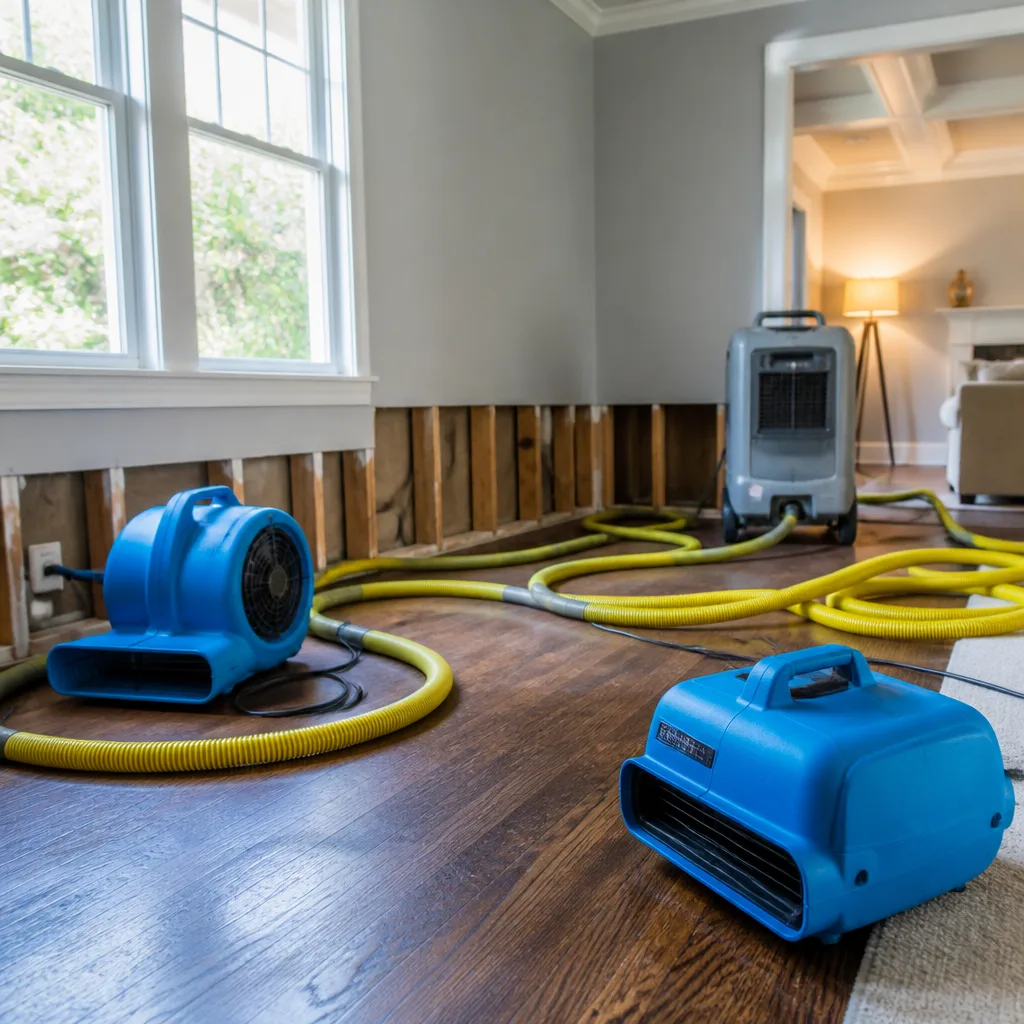
The home center will happily rent you a carpet fan and a small dehumidifier. They will not rent you an Injectidry panel system, a Phoenix axial air mover, a Dri-Eaz low-grain refrigerant dehumidifier, or a moisture mapping kit with penetrating probes. Those are the tools that actually dry a house correctly, and the difference is measurable.
A box fan on a wet floor dries the surface. A professional axial air mover pushes 2,500 to 4,000 CFM across the floor at a low angle, creating the air velocity needed to drive moisture out of concrete, hardwood, and subfloor cavities. A residential dehumidifier pulls a few pints a day. A Dri-Eaz or Phoenix commercial unit pulls 60 to 140 pints a day and maintains the low specific humidity needed inside the room. They are not the same category of equipment.
For wall cavities and under cabinetry, the real workhorses are Injectidry panels and hose systems, which force air directly into enclosed spaces. The water trapped behind wainscoting, under a built-in cabinet, or inside a double-stud wall will not dry with ambient air movement. It has to be mechanically dried with positive airflow, or it will rot.
And then there’s the moisture log. A professional restoration technician doesn’t set up the fans and leave. They place moisture sensors, take baseline readings, map the affected area, set dry goals based on the dry standard for each material, and return daily until every reading is within acceptable limits. That log is not just a record of the job - it’s the proof the insurance carrier uses to confirm the claim was handled correctly, and the proof the homeowner keeps for future peace of mind.
The IICRC, the body that sets the water restoration standard, publishes specific drying targets and protocols. The RIA and the IFA do the same for mold and fire. The professional equipment and the daily documentation are how a company meets those standards. A wet vac and a prayer are not.
Common Mistakes to Avoid
- Waiting to start. Mold starts in 48 to 72 hours, faster in a Teaneck summer. Every day of delay in drying or mitigation expands the project.
- Drying only the visible area. Water runs along subfloors, vapor barriers, and joists. The wet line is always bigger than the stain on the wall.
- Using bleach on mold without fixing the moisture source. The mold will be back, and the bleach has driven spores into the air without killing the colony in the wall.
- Ripping out wet materials before documenting. That pile of carpet at the curb was your insurance evidence. Let the adjuster and the restoration company photograph it first.
- Running the HVAC during a mold or sewage event. You are donating free spores and contaminants to every room in the house.
- Painting over a water stain or mold patch. Paint is not a moisture barrier. The problem continues behind the paint, unseen, while you sleep better at night.
- Choosing a restoration company by price alone. The lowest bid in this trade often means bypassed documentation, rented equipment, or a subcontracted crew that disappears before the dry standard is met. In our 42-plus years of local service - our company built around a dispatch board, not a sales desk - we’ve learned that the written guarantee matters more than the line-item savings.
When to Call a Professional
Call a professional the moment the water is not clean, the area is larger than a small bathroom, the water has touched walls or flooring, or the damage includes smoke, mold, or sewage. Those four conditions cover the overwhelming majority of real-world damage in Teaneck. If you are not sure, a phone call costs nothing, and a professional can often tell you over the phone whether the situation is something you can handle or something you should not touch. Floodline Restoration Co. offers free estimates in Teaneck - call (551) 365-4026.
Here is the simplest version of this entire guide: if the water is clean, the area is small, and you caught it fast, use your best judgment. In every other situation, the professional call is the cheaper call, once you account for what a failed DIY dry-out will cost you later.
Frequently Asked Questions
You can fully dry a small, clean-water flood on a concrete floor if you catch it within the first hour and have strong fans and a real dehumidifier running immediately. If the water touched drywall, carpet, baseboards, or a wood floor, or if it came from a drain or outside, the hidden moisture is almost certainly beyond DIY capacity and will cause mold or rot later. Call (551) 365-4026 for a professional moisture assessment.
The best local companies in Bergen County run live 24/7 dispatch, which means a real person answers the phone at any hour and a crew is on the road the same visit, not days later. At Floodline Restoration Co., a live dispatcher answers around the clock, every day.
Most homeowners policies in New Jersey cover sudden and accidental water damage, fire, storm, and often mold remediation tied to a covered loss, minus your deductible. Sewage backup coverage sometimes requires a specific endorsement, so check your policy. The restoration company documents the damage and bills the carrier directly, so you are not fronting the full bill.
If the visible mold is on a non-porous surface like concrete or tile, cleaning it is reasonable. If it is on drywall, plaster, wood, or carpet, the material needs removal and the hidden colony needs professional treatment with containment, because the visible mold is only part of the problem.
It is a written guarantee that the work was done correctly, and if it wasn’t, we make it right. No arguing, no paperwork battles. It is the Keystone Standard at Floodline Restoration Co., and it applies to our restoration work from first extraction through rebuild.
Many Teaneck homes were built between the 1920s and 1970s, with plaster, hardwood, and older framing. Water travels differently in those houses, and materials like plaster hold moisture longer than modern drywall. Local experience matters because the dry standard for a 1950s colonial is not the same workflow as a 2010s build.
The Bottom Line
The DIY decision always comes down to one question: is this job fully within your ability to finish correctly, documented correctly, and dry down to the standard that prevents problems later? For small, clean-water, hard-surface situations, the answer can be yes. For everything else, professional restoration is the cheaper and safer path, especially once insurance is involved. The equipment, the documentation, the direct billing, and the written guarantee change the math. If you’re standing in a wet Teaneck basement trying to decide, call us. We’ll tell you straight what you’re dealing with, and we’ll be there when we say.
Contact Floodline Restoration Co. home for a free estimate in Teaneck at (551) 365-4026.
Written by Curt Bowman, Owner at Floodline Restoration Co., serving Teaneck since 2010.