
Last updated August 25, 2026
Free visual inspection and a written scope of work before any mitigation begins - photos, moisture readings, and drying logs go in your claim file
The scope we write is the scope we bill. Anything new gets shown to you, in writing, before we touch it.
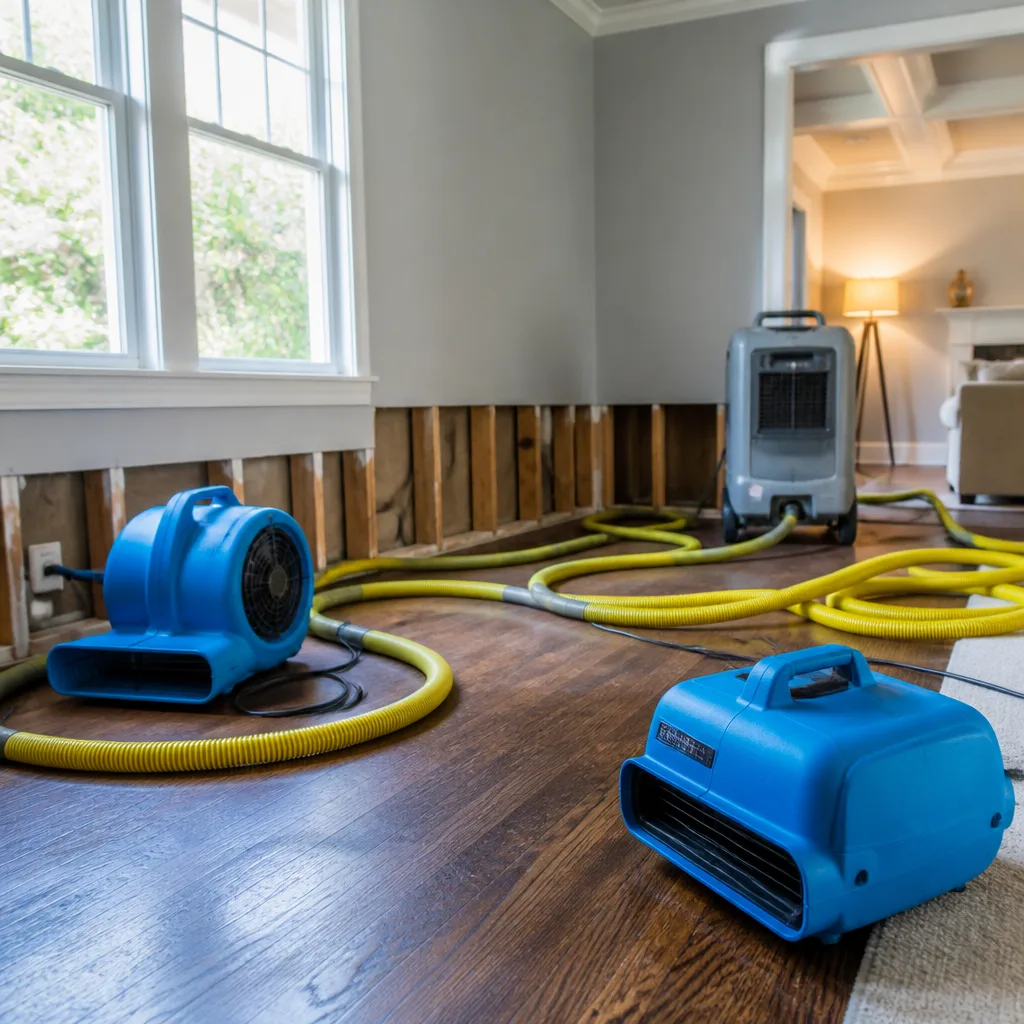

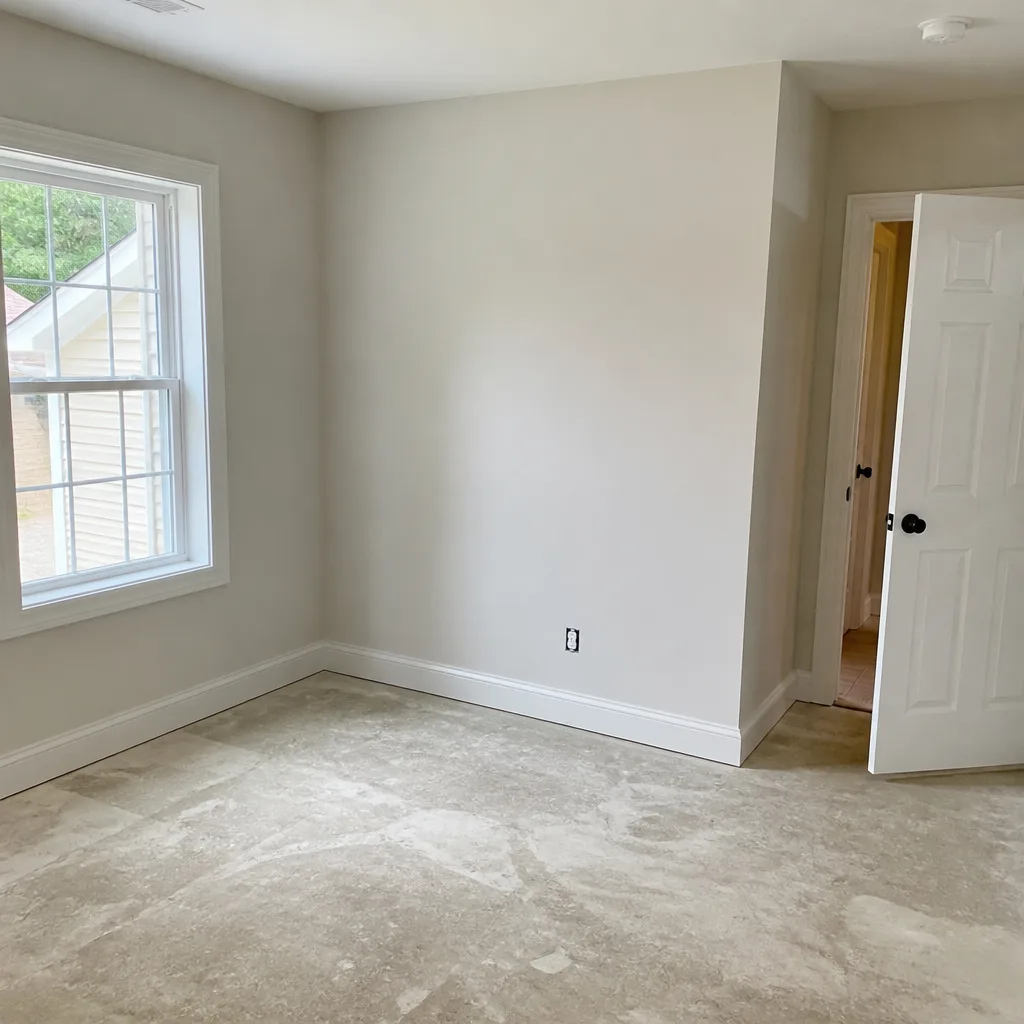

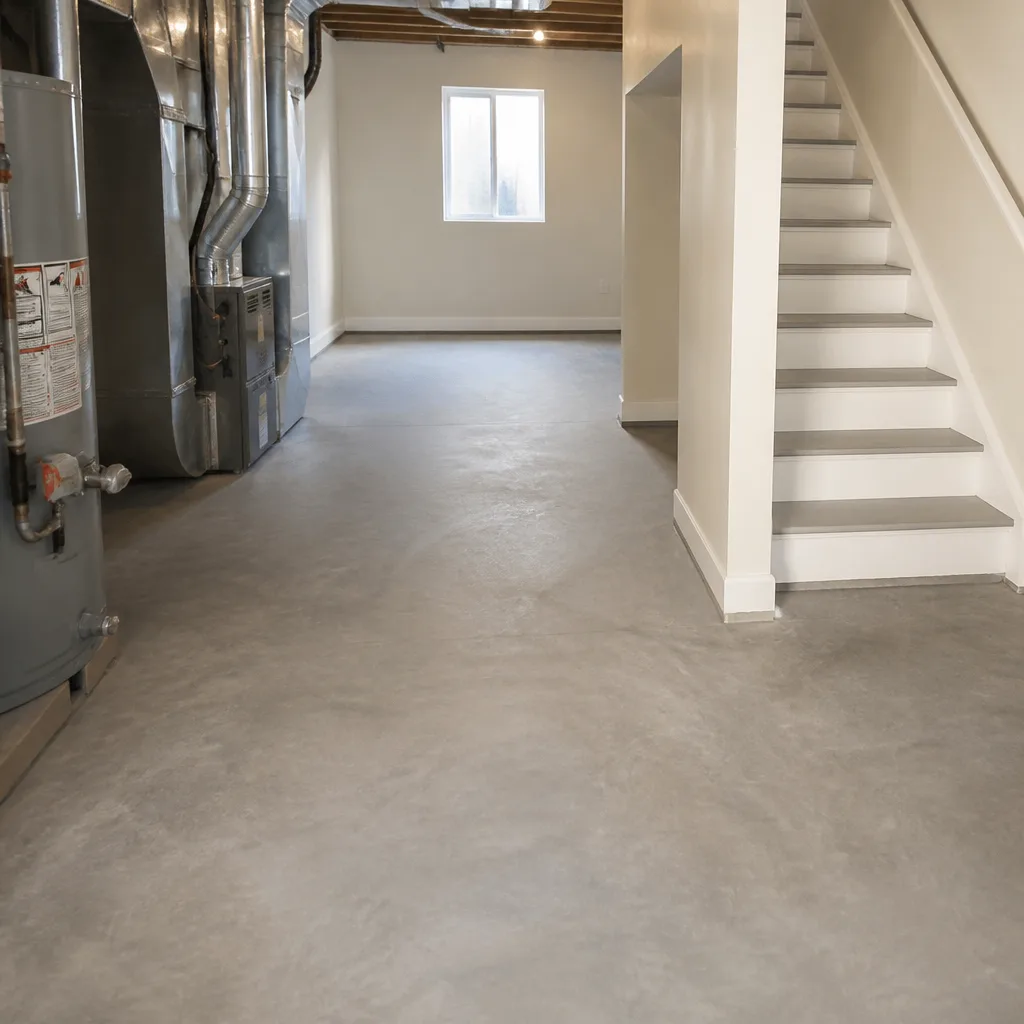

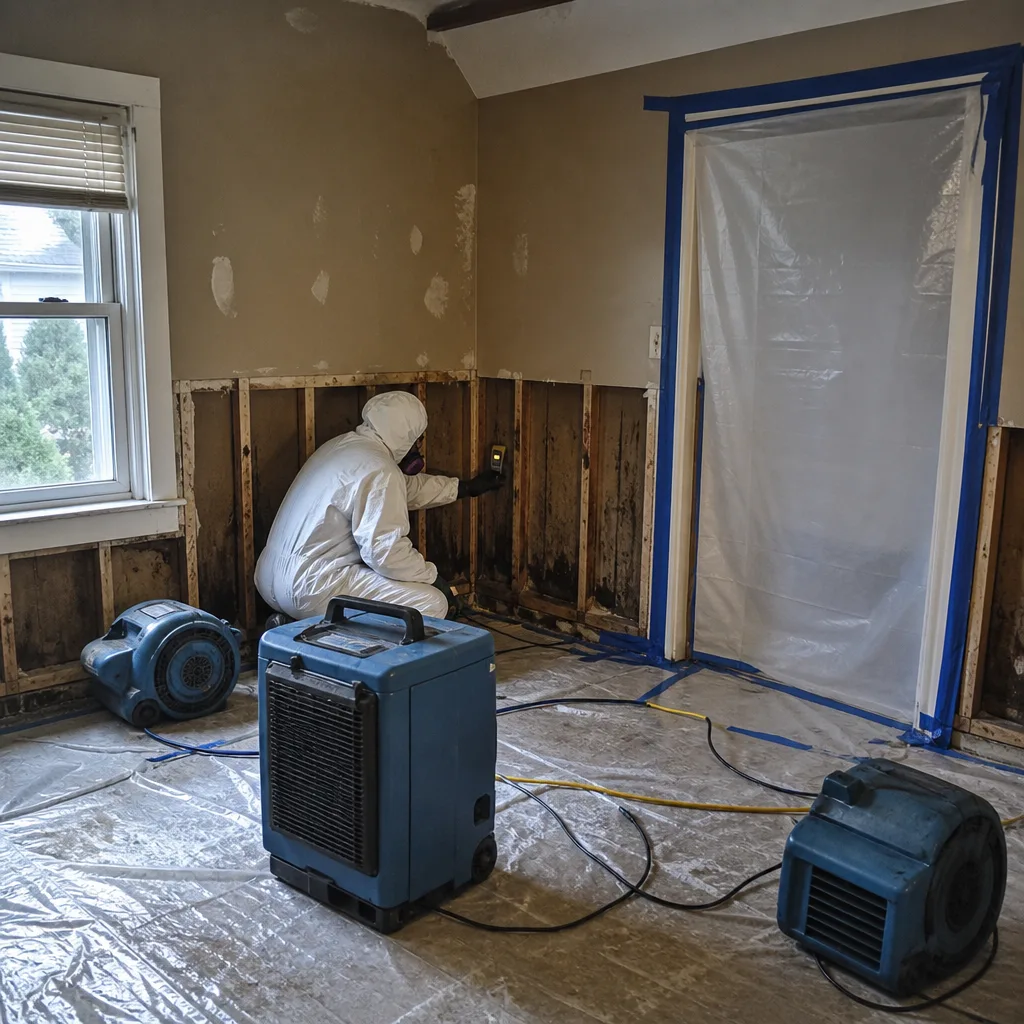 Before
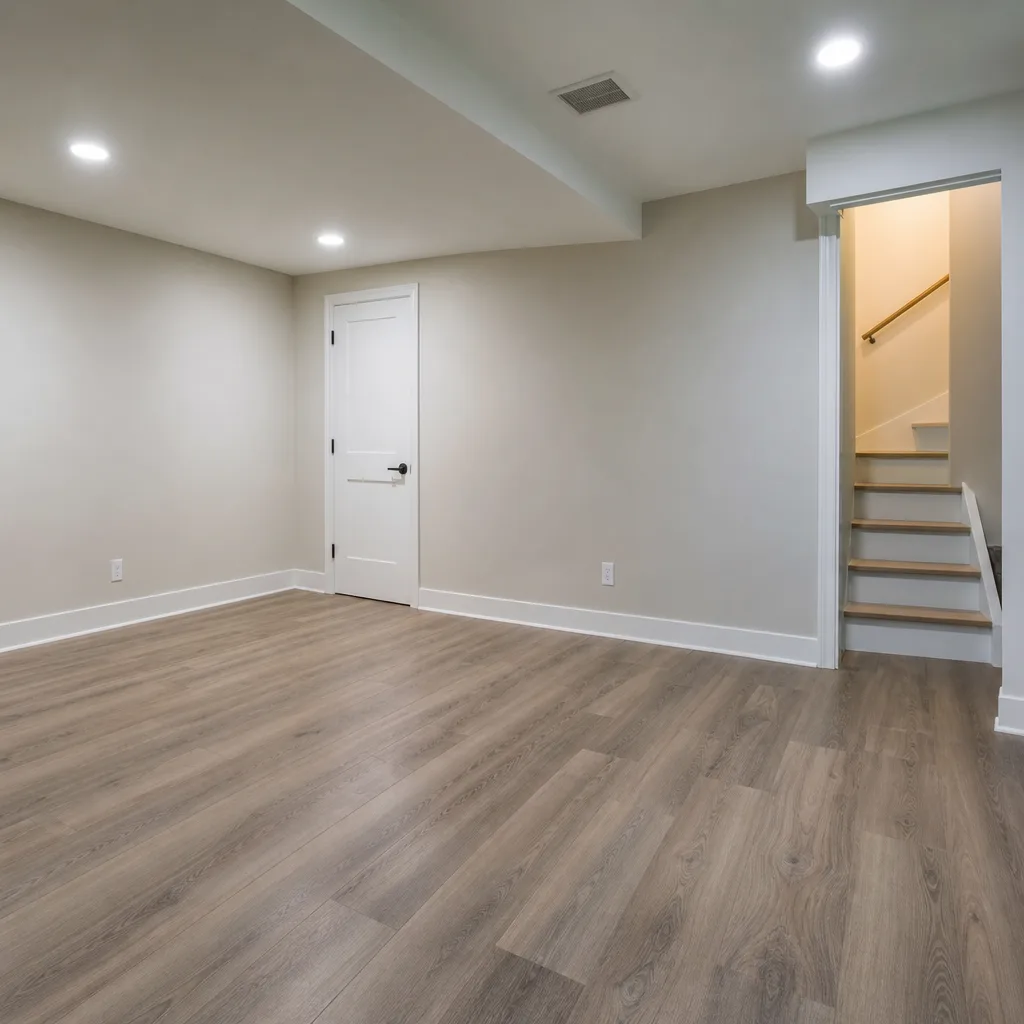 After
After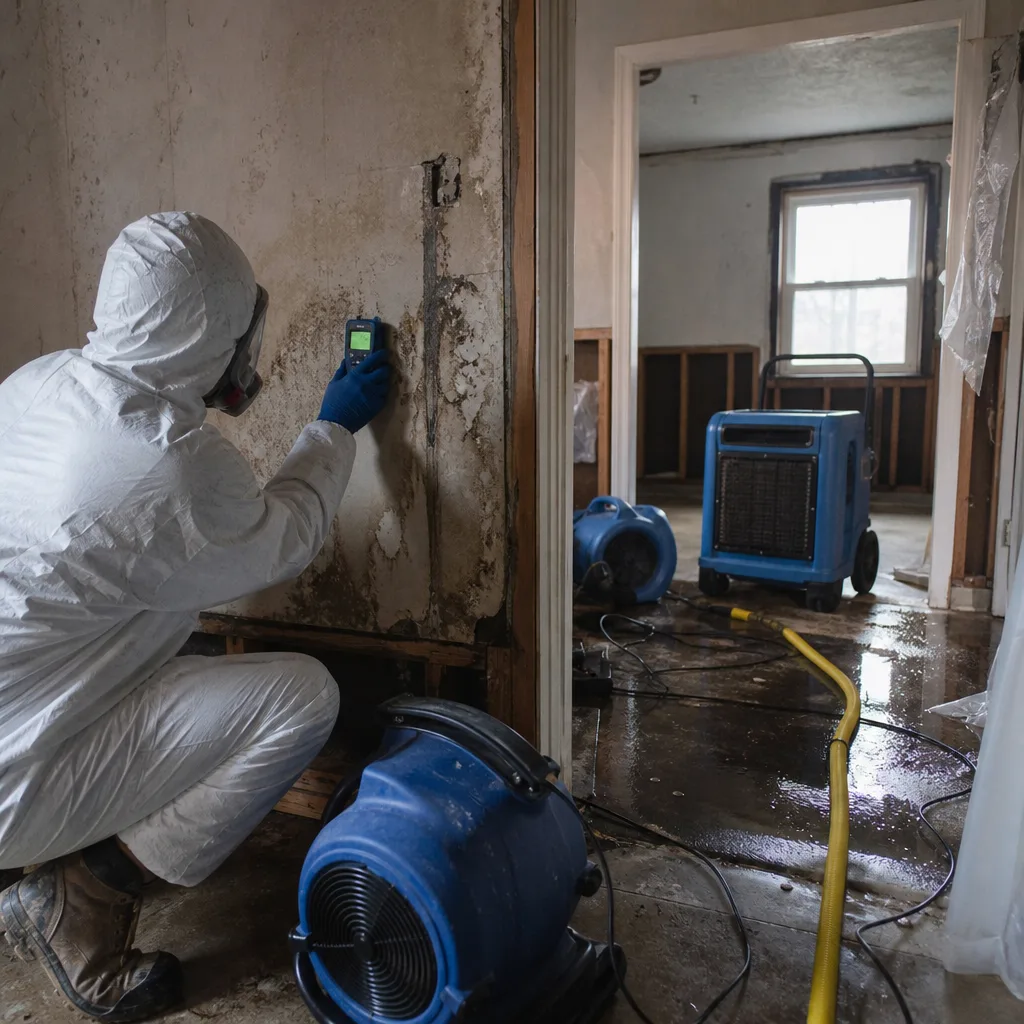 Before
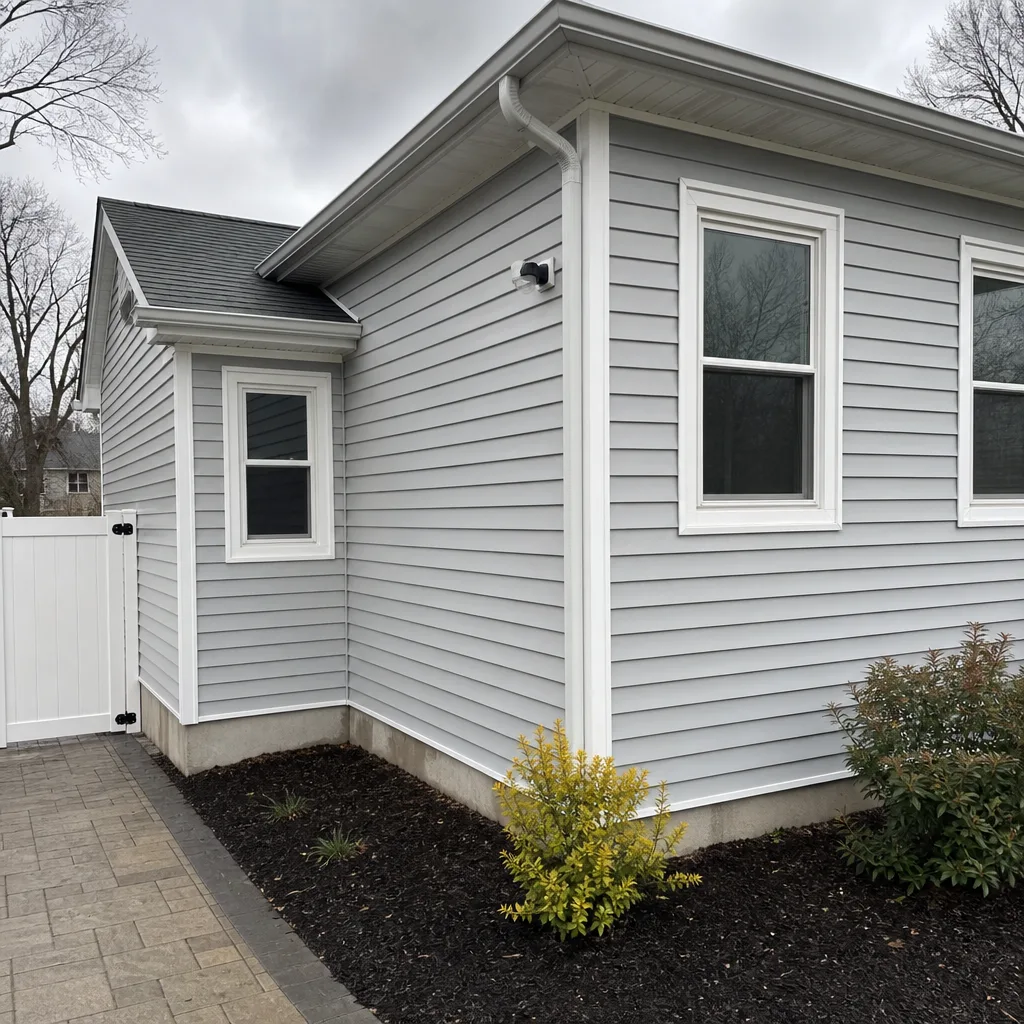 After
After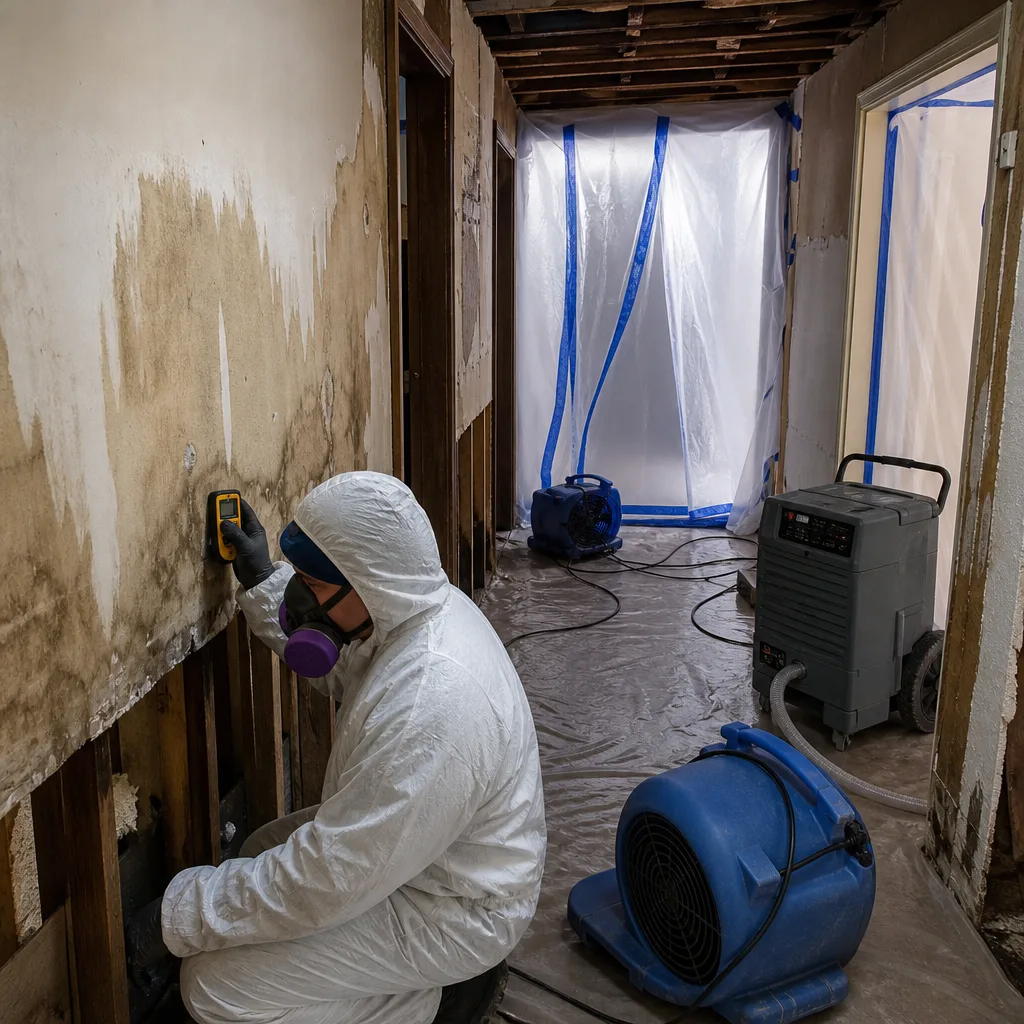 Before
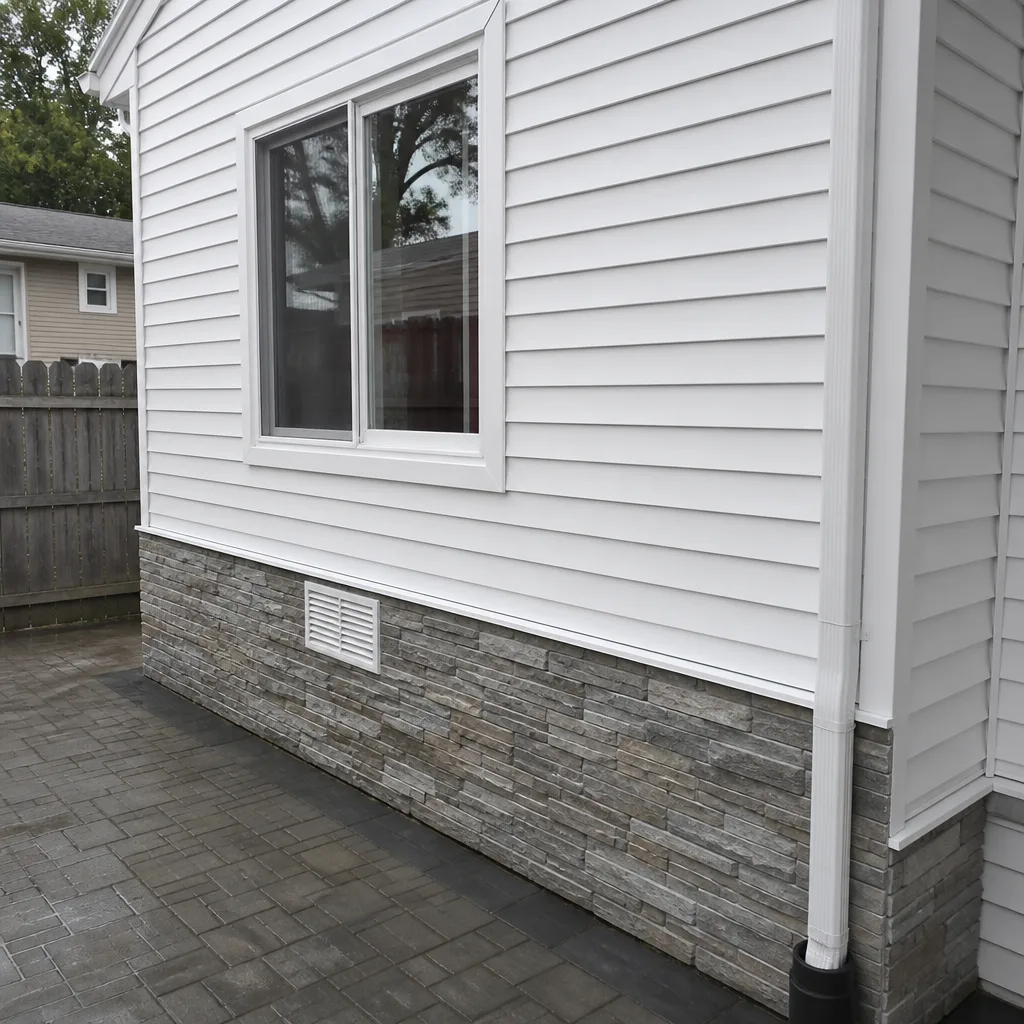 After
AfterDamage Restoration Warning Signs: A Teaneck Homeowner’s Reference Guide
Water moves through a house the way bad news travels through a neighborhood: quietly at first, then everywhere at once. Most Teaneck homeowners we meet don’t call because of the disaster they saw. They call because of the one they didn’t see until it had already spread three rooms over. The fact is, by the time a stain shows on drywall, the moisture problem behind it is usually two to six weeks old. This guide walks you through the warning signs that mean real trouble, what each one costs to fix when caught early versus late, where Teaneck’s housing stock and weather make things worse, and what you can safely check yourself without making it worse.
Quick Answer
The first warning signs of hidden damage in a Teaneck home are usually a persistent musty smell with no visible source, baseboards that have started to cup or pull away from the wall, paint that bubbles or peels without any leak above it, and water bills that creep up month over month while usage stays the same. If you see any of these, the underlying moisture problem has likely been active for weeks and has already spread further than the visible damage. Call a restoration company the same week you notice it, not after you’ve opened the wall yourself.
Table of Contents
- Water Stains and What They Actually Tell You
- The Smell That Won’t Leave
- Mold Growth: When It’s a Problem and When It’s a Disaster
- Foundation and Slab Warning Signs
- Structural Red Flags in Teaneck’s Older Housing Stock
- Plumbing and Appliance Warning Signs
- After a Storm: What Needs Attention Within 48 Hours
- Common Mistakes to Avoid
- When to Call a Professional
- Frequently Asked Questions
Water Stains and What They Actually Tell You
A water stain on a ceiling or wall is not the problem. It’s the evidence. The stain tells you water has been traveling, and by the time it shows, the path is usually longer than you think. In Teaneck’s center-hall colonials and split-levels from the 1940s through 1960s, a stain on a first-floor ceiling near an exterior wall often traces back to a second-floor bathroom supply line, not the roof. A stain in a corner where two exterior walls meet usually means a roof penetration, gutter overflow, or failing flashing, especially on the north-facing side of the house where snow and ice sit longest in January and February.
Here’s what different stain shapes and colors typically mean:
- Light brown or yellow with a defined edge: Older leak that has dried and re-wetted. The minerals left behind each time create the ring. The leak is probably still active, cycling with rain or use.
- Dark brown, soft, or sagging: Active, ongoing saturation. The drywall or plaster is losing structural integrity. This is past the point of drying alone; the damaged section will likely need removal.
- Multiple small rings in a line: Water following a joist, rafter, or pipe run. The entry point is somewhere above the line, not directly over the end of the stain.
- Stain accompanied by small cracks in plaster: In older Teaneck homes, the mix of original plaster and decades of seasonal movement means water has softened the keys that hold plaster to lath. The ceiling is now a falling hazard in addition to a moisture problem.
Teaneck’s freeze-thaw cycles make roof leaks a recurring feature of winter. Ice dams form on the north eaves, water backs up under shingles, and the leak appears on the ceiling of a second-floor bedroom three weeks after the snow has melted. If a stain appears in February or March with no rainfall for days, start with the roof plane above it, not the plumbing.
One thing to remember: a stain that hasn’t grown in a year is still a problem. It means the source is slow but not stopped, and the moisture inside the cavity has been feeding mold, dust mites, and wood rot that entire time. The fact that the paint hasn’t peeled just means the ceiling is absorbing it faster than it evaporates.
The Smell That Won’t Leave
Musty is a polite word for what microbial growth actually smells like. It’s a compound mix of fungal spores, bacterial byproducts, and damp building materials breaking down. In Teaneck homes with full basements, this smell often starts near the floor drain, the laundry area, or under the basement stairs and works its way up through the return ducts. In homes on slabs, it gathers in closets, under sinks, and around the water heater first.
What matters is whether the smell is constant or intermittent. A smell that comes and goes with rain or with the shower running points to an active leak with a wet-dry cycle. A smell that never goes away, even on dry winter days, points to a reservoir of absorbed moisture somewhere: under the basement floor, inside a wall cavity, beneath the tub, or in the subfloor under a slow appliance leak.
Here’s how to think about that smell in practical terms:
- Track the floor it’s strongest on. Basement smells that stay in the basement usually mean groundwater or drain issues. Smells on the first or second floor usually mean a plumbing leak, a roof leak, or an appliance leak that’s been running into floor framing.
- Check the return air vent. If the smell is stronger when the heat or AC runs, the source is likely inside or below the duct run. That’s not a filter issue. That’s moisture inside the system, usually from a leak that’s been feeding the ductwork.
- Look for the quiet corner. The smell is strongest where the air is stillest. Open the closet under the stairs. Pull the basement door closed on a dry day and come back in an hour. The nose finds the source faster than any meter on the first pass.
- Don’t mask it. Sprays, candles, and plug-ins do nothing for the underlying source. In fact, they delay the response while the moisture spreads. If you can smell it, the material behind the wall is already supporting microbial growth.
In our experience in Teaneck, the most common hidden smell sources we find are: a leaking washing machine supply line inside the wall, a toilet wax ring that’s been seeping through the subfloor for months, and a refrigerator water line behind the unit dripping into the floor. All three can run for a year before anything visible appears.
Mold Growth: When It’s a Problem and When It’s a Disaster
Mold is everywhere in New Jersey. The spores are on every surface, in every room, on every car. The question isn’t whether mold is present. It’s whether the conditions exist for it to colonize. Mold needs three things: a food source (drywall, wood, carpet, paper), the right temperature (50 to 80 degrees, which describes most of a Teaneck house most of the year), and moisture above about 60% relative humidity at the surface. Take away any one and it stops. Give it all three and it starts within 24 to 48 hours.
What homeowners see as a small patch of black spots on a basement wall is usually the visible tip of a much larger colony inside the wall cavity. The paint on the surface is damp and the mold is feeding on the paper facing of the drywall behind it. By the time it’s visible, the affected area is typically three to five times larger than what you can see.
The practical difference between a problem and a disaster comes down to this:
- A problem: Surface mold on concrete, tile, or painted plaster where the source was a one-time event (a spilled bucket, a window left open in the rain) and the material dries completely within 48 hours. This can often be cleaned and doesn’t require demolition.
- A disaster: Mold on drywall, carpet, wood framing, or inside ducts where the source is ongoing or the material has been wet for more than a few days. This requires removal of the affected material, drying of the cavity, and repair of the moisture source. Cleaning the surface is cosmetic; the mold will return within weeks.
One caution that matters: if you see what looks like black mold in a Teaneck home and you have respiratory issues, or if anyone in the house has a compromised immune system, the safest move is to close the area off and call a professional. Disturbing mold releases spores into the air. A remediation crew with proper containment and air scrubbing equipment (we use HEPA-filtered negative air machines and sealed containment barriers as the job requires) removes the colony without spreading it through the rest of the house. The Floodline Restoration Co. home page walks through what our mold remediation process looks like start to finish.
Foundation and Slab Warning Signs
Teaneck’s soil is heavy clay in many areas, which expands when wet and contracts when dry. Over fifty years, that cycle moves foundations in small increments. In and of itself, some movement is normal for a house this age. But water changes the equation. When a downspout discharges against the foundation, or a basement floor drain backs up, or the water table rises after heavy rain, the soil swells against and under the slab, and the movement accelerates.
Watch for these foundation-level warning signs in order of urgency:
- Horizontal cracks in basement walls, especially with an offset lip: This is pressure, not settling. Water in the soil is pushing the wall inward. Horizontal cracks are more serious than vertical cracks because they indicate the wall is under active load and can continue moving.
- Stair-step cracks in brick or block: In Teaneck’s brick-faced homes, cracks that climb along the mortar joints in a staircase pattern usually trace to differential settlement, often caused by water eroding soil from under one corner of the foundation.
- Basement floor heave or buckling: A slab that has cracked and shifted upward is often the result of clay soil taking on water and swelling. Teaneck basements built before perimeter drains became standard are particularly exposed to this.
- Doors and windows that stick seasonally: In a house that’s faced the same way for thirty years, seasonal sticking usually means the frame has moved. The movement tracks with soil moisture more than with temperature.
- Efflorescence on the walls or floor: The white, chalky powder on concrete is dissolved minerals left behind when water evaporates. By itself it’s cosmetic, but it proves water is moving through the concrete. The path it took is still there, and next time the volume may be higher.
A Teaneck homeowner noticing any horizontal crack in a basement wall should treat it as an active water-management problem, not a cosmetic one. The first step is usually redirecting water away from the foundation: extended downspouts, regrading the soil (Teaneck’s prop slopes vary block to block), and checking that the existing French drain or sump system is actually moving water. The second step is drying the wall cavity inside and assessing whether interior drainage or crack repair is needed. That’s a conversation better had with a restoration company that also does structural work, not with a landscaper who only moves dirt and doesn’t read moisture meters or understand building science.
Structural Red Flags in Teaneck’s Older Housing Stock
Teaneck’s housing stock is one of its best assets and its biggest restoration challenge. A 1958 center-hall colonial built with true 2×4 framing and plywood sheathing is a better house than most new construction, but it has had 60 years for water to find every joint, seam, and flashing. The structural warning signs in these homes are subtle because the building materials are forgiving right up to the point they’re not.
Here are the structural red flags that matter most in this market:
- Sagging roof ridge lines or rafter tails: Walk to the street and look at the roof line. A ridge that dips in the middle, or rafters that seem to bow between the eave and the peak, usually means long-term moisture weakening the roof decking or the rafter ends where water has been getting in under the fascia. Teaneck’s older homes often have original roof sheathing that’s been patched over decades of leaks, and the patching hides what the decking looks like.
- Bouncy or sloped floors on the first floor: In a house with a basement, a floor that felt firm ten years ago and feels springy now usually means the beam or the joist ends near the foundation wall have absorbed moisture. In Teaneck’s clay-heavy soil, the joist pockets in the foundation wall are a prime moisture path.
- Loose railings, pulled nail heads, or small ceiling cracks appearing in clusters: When several of these show up in one room at the same time, the framing has moved. Water is usually the variable that changed.
- Rot in sill plates and rim joists: In the basement, look at the top of the foundation wall where the floor joists sit. If the wood there is dark, soft, or crumbles when you push a screwdriver into it, you have a water path from outside. Teaneck homes without sill sealing or with failed gutter systems frequently see rim joist rot on the side of the house that gets the weather.
The takeaway is simple: in an older Teaneck home, any structural warning sign should be investigated as a moisture problem first and a framing problem second. Replacing the damaged wood without stopping the water is the most expensive mistake you can make, because the new wood sits in the same wet pocket and fails again in five years.
Plumbing and Appliance Warning Signs
Most disaster-level water damage in Teaneck homes starts with the same six fixtures: supply lines, toilet wax rings, washing machine hoses, water heater tanks, dishwasher connections, and refrigerator ice-maker lines. The failure is rarely sudden. These components warn for weeks or months before they let go, and the warnings are cheap to respond to compared to the full restoration after the failure.
Here’s what to check and in what order:
- Water heater: Check the floor around the base every month. A slow leak from the bottom pan or valve leaves a mineral crust or a slight dampness on the concrete, which then evaporates quickly. In Teaneck’s basements, the heater often shares space with the HVAC system, and the moisture goes into the air and into the return duct before it shows on the floor. A water heater over 10 years old is on borrowed time in this market, where hard water shortens tank life.
- Toilet wax rings: A toilet that rocks slightly, or a smell of sewage near the base, or water staining the ceiling below the bathroom all point to a wax ring that’s no longer sealing. The leak is often intermittent, so the subfloor stays wet for hours a day and then dries enough to hide the evidence. By the time the ceiling below shows damage, the subfloor is usually compromised.
- Washing machine hoses: If your hoses are rubber, they’re the originals unless you know otherwise. Rubber hoses fail without warning and flood at full supply pressure. Newer houses in Teaneck sometimes have washing machines on upper floors, which makes a burst hose a multi-level flood. Replacing rubber with braided stainless steel is the cheapest structural insurance in the house.
- Under-sink valves and supply lines: A slow drip at a shutoff valve is a five-minute fix when caught early. When ignored, the drip wets the cabinet floor, which wicks into the base in the corner, and the next thing you know the cabinet is moldy inside a wall cavity that no one opened. The earliest sign is often a warped cabinet floor or peeling veneer on the cabinet base.
- Refrigerator water lines: These run behind the appliance where no one looks. A pinhole leak at a fitting drips into the floor and into the subfloor, and in a kitchen over a basement or a finished lower level, the water travels down and shows somewhere unexpectedly.
After a Storm: What Needs Attention Within 48 Hours
Teaneck sits in a weather pattern that delivers noreasters with heavy rain, spring thunderstorms through the summer, and the occasional tail-end of a hurricane in the fall. Each storm should trigger a specific set of checks within the first two days. The 48-hour window matters because that’s roughly how long wet building materials take to support visible mold growth in a heated house.
Here’s the order of operations for storm damage checks in a Teaneck home:
- Check the basement or crawl space before you do anything inside the living areas. Groundwater is the big variable after heavy rain. If the basement floor is wet, the water came up through the slab or the foundation joint, not down from the roof. Get the water pumped and the space drying within the first day if possible. Standing water in a finished Teaneck basement means carpet, pad, drywall, and sometimes trim, baseboard, and lower portions of walls all become candidates for removal and drying or replacement.
- Walk every room and look up. New stains after one storm are different from old stains that have been there. Fresh stains are darker, the edges are less defined, and the surface feels damp. On the top floor, the issue is usually a roof leak or ice damming. On the first floor, check above for bathroom and kitchen drain or supply lines.
- Check the attic within the first full day, especially after wind-driven rain. Wind-blown rain finds paths that ordinary rainfall doesn’t: under ridge vents, along gable end walls, around chimney flashing. In the attic, look for damp insulation, water marks on the underside of the roof decking, and wet rafter tails near the eaves.
- Check windows and doors for water around the interior trim. After a driving rain, water can push past old weatherstripping and run down inside the wall. The evidence shows on the drywall below the window, on the sill, or under the door threshold.
- Watch the sump pump if you have one. After a major rain in Teaneck, groundwater levels rise for a day or two after the storm as water percolates through the soil. A pump that ran non-stop during the storm and then runs dry can overheat and burn out, which sets up the next story for flooding. If the pump is running constantly, listen for cycling sounds and check that the discharge line outside is actually moving water away from the foundation, not recirculating it against the wall.
The 48-hour checks are about catching the moisture while it’s still localized. Past that point, the cleanup gets bigger, the drying takes longer, and the reconstruction list grows.
Common Mistakes to Avoid
- Waiting to see if a stain dries on its own. A wet stain that disappears from sight has not dried. The moisture has wicked deeper into the material or migrated into the framing. The stain coming back means the source is still active and has been the whole time. In Teaneck’s humid summers, a wet interior wall can take weeks to truly dry without equipment, and mold starts before the material is half-dry.
- Putting a fan on a suspect area and calling it dry. Moving air across a damp surface dries the surface layer, not the material behind it. The moisture meter reading is the only number that matters. Without one, you’re guessing with a fan.
- Painting over a stain without addressing the source. The stain bleeds through within months, but the real problem is that the moisture path is still active behind the paint. In Teaneck’s older homes, the paint layer becomes a vapor barrier that traps moisture inside the cavity and accelerates the rot.
- Skipping the neighbor conversation. If the houses on your block were built by the same builder in the same decade, the houses next door have the same vulnerabilities. A foundation issue at the neighbor’s place two doors down is a heads-up to check your own. Among the 92 Teaneck neighborhoods from the old farm boundaries to the newer developments off Cedar Lane, construction patterns cluster block by block.
- Letting an insurance adjuster handle the whole process without your own evidence. The adjuster is not your contractor. The adjuster’s report is built from what gets documented. We’ve found that photo documentation and a written moisture log make the difference between a claim paid fully and a claim paid partially. Take your own photos, keep your own notes, and have your restoration contractor document what the adjuster sees.
- Choosing restoration based on the cheapest estimate. In this trade, the scope drives the price more than the contractor’s markup. A lower estimate usually means a smaller scope, not a better price. When one bid is half of another, the lower bid is usually excluding drying, or removal, or the rebuild that the higher bid includes. Get at least two scopes in writing and compare what’s actually included.
When to Call a Professional
Some things are worth looking at closely and some things are worth not touching at all. Call a professional when you smell gas, when water has reached any electrical components or the panel, when sewage has backed up, when mold covers an area larger than a bath towel, when a ceiling is sagging or stained in a way that could indicate pooled water above, or when you’ve had a supply line or tank leak that ran for more than one day before it was discovered.
Also call when the damage involves an insurance claim and you want the scope documented properly from the start. Water and fire damage claims work best when the remediation company and the adjuster see the same evidence at the same time. Floodline Restoration Co. offers free estimates in Teaneck. Call (551) 365-4026 and we’ll meet you at the house, walk the damage, and give you a written scope before anything else happens. Done right - and backed in writing.
Frequently Asked Questions
A new stain is darker, damp to the touch, and lacks defined edges because the water is still spreading. An old stain is drier, lighter, and often has irregular edges or rings from mineral deposits left after previous wet-dry cycles. The soak mark alone doesn’t tell you whether the source is still active, so the safest approach is a moisture meter check on the stained surface and the surrounding area.
Most homeowner policies cover sudden and accidental water damage, and many cover hidden damage from a pipe leak that happened while the policy was in force. Gradual damage over years is typically excluded unless the policy has a specific rider. The deciding factor is usually documentation. Photo evidence, a written scope from a licensed restoration contractor, and direct communication between the contractor and the adjuster improve the odds the claim pays out in full.
Mold can begin colonizing within 24 to 48 hours on damp drywall, carpet, or wood in a heated Teaneck home. The colony may not be visible for several more days or weeks, but the process starts quickly. Drying within the first 48 hours is the single most important step to prevent mold growth from taking hold.
The first signs are usually a musty smell in the room, baseboards that start to cup or pull away, or paint that bubbles and peels without any visible water on the floor or ceiling. You can also press on the drywall near the suspected entry point. If it feels soft, spongy, or cooler than the surrounding wall, the material is holding moisture behind the surface.
You need a restoration company when the water has been running long enough to reach building materials. A small leak in a visible pipe under the sink, caught the same day, might be a plumber’s job. A leak that has run inside a wall cavity, under flooring, or behind cabinets for days or weeks is a restoration job because the drying and material removal in the affected area need to happen before repairs. The size of the visible stain rarely matches the size of the hidden moisture pattern.
Turn off the water at the nearest shutoff valve if the leak is from a supply line or fixture. Shut off the electricity at the breaker if water is near outlets, switches, or the panel. Move furniture and belongings out of the wet area. Take photos of everything before anything is moved or cleaned. Don’t use a shop vac to remove water that may be contaminated, and don’t turn on the HVAC system if the water has reached the ductwork. Call (551) 365-4026 and a live person will walk through the specifics of your situation immediately.
The Bottom Line
Water damage in a Teaneck house is not a one-time event with a discrete cost. It’s a process that continues as long as the source is active and the materials stay wet. The warning signs are consistent across every neighborhood in town: stains that appear without rainfall, musty smells in still air, baseboards pulling away, doors that stick seasonally, and water bills that don’t match usage. None of these is a problem to watch. Each one is a problem to diagnose, dry, and repair before the scope grows and the insurance conversation gets harder. The line the water left is where we start. Call (551) 365-4026 any hour, day or night, and you’ll speak with a live person who can schedule a free estimate and get a certified crew moving.
Written by Curt Bowman, Owner at Floodline Restoration Co., serving Teaneck since 2010.