
Last updated August 25, 2026
Free visual inspection and a written scope of work before any mitigation begins - photos, moisture readings, and drying logs go in your claim file
The scope we write is the scope we bill. Anything new gets shown to you, in writing, before we touch it.
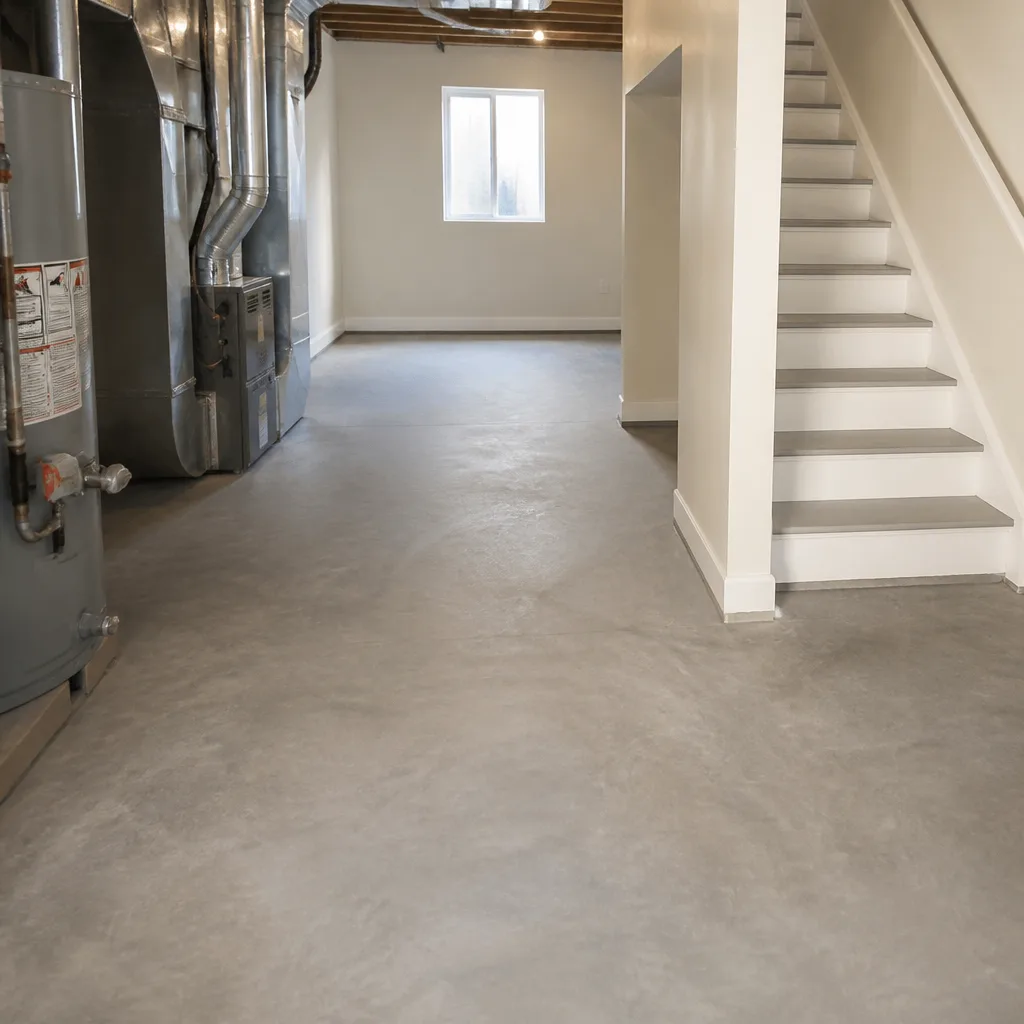

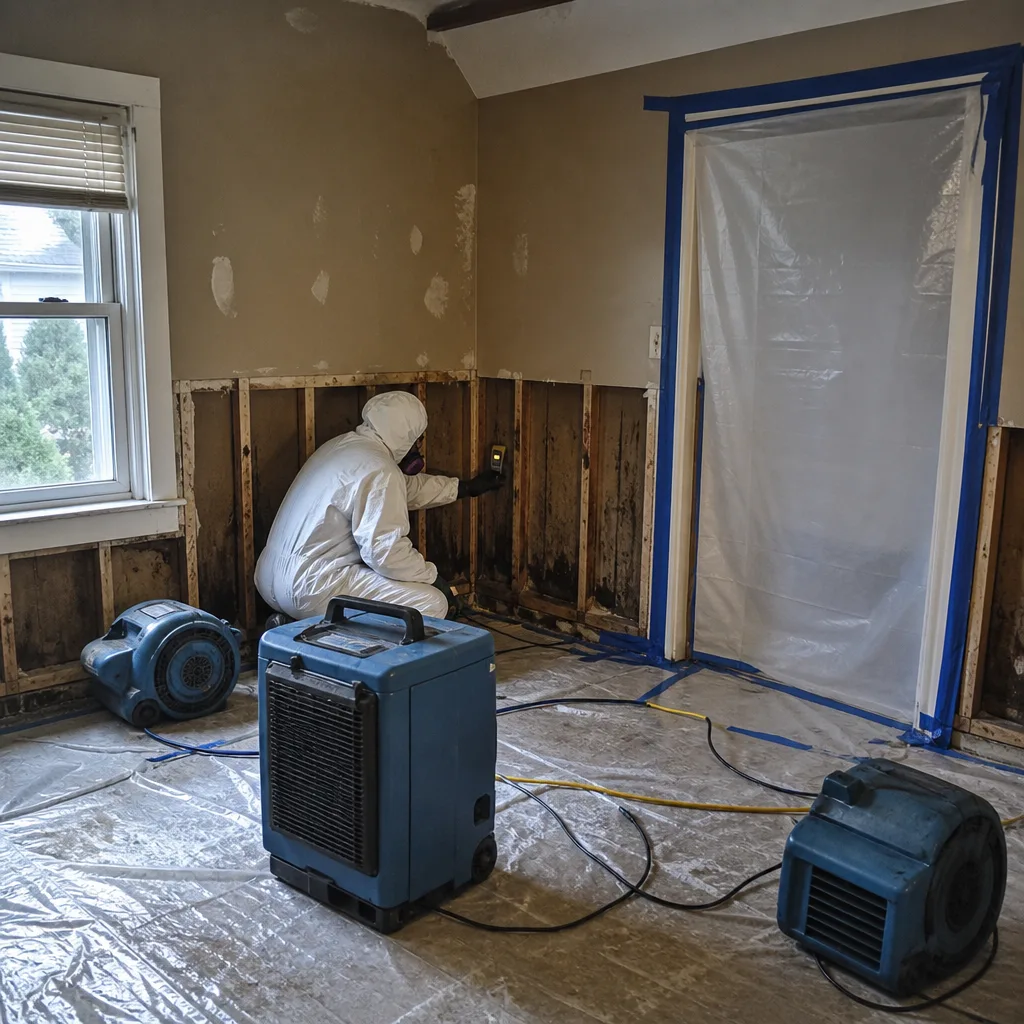 Before
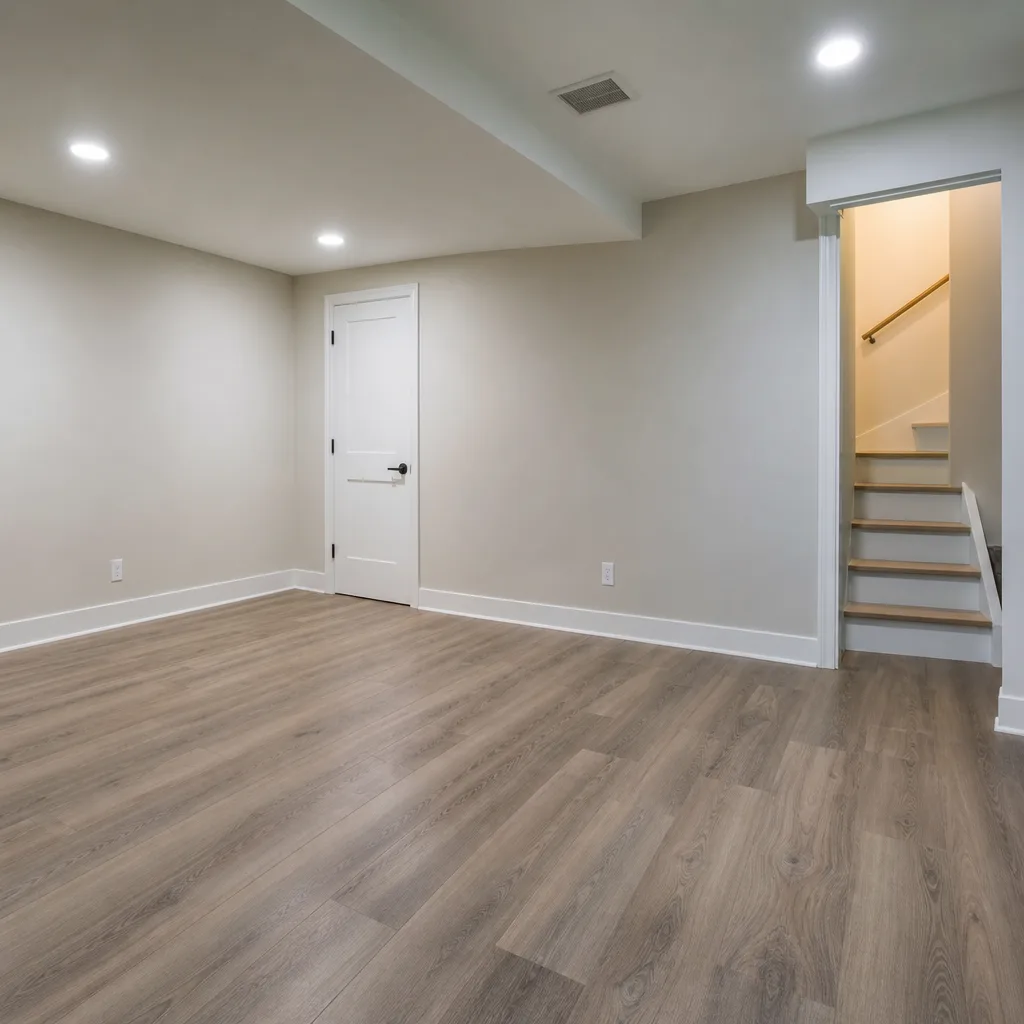 After
After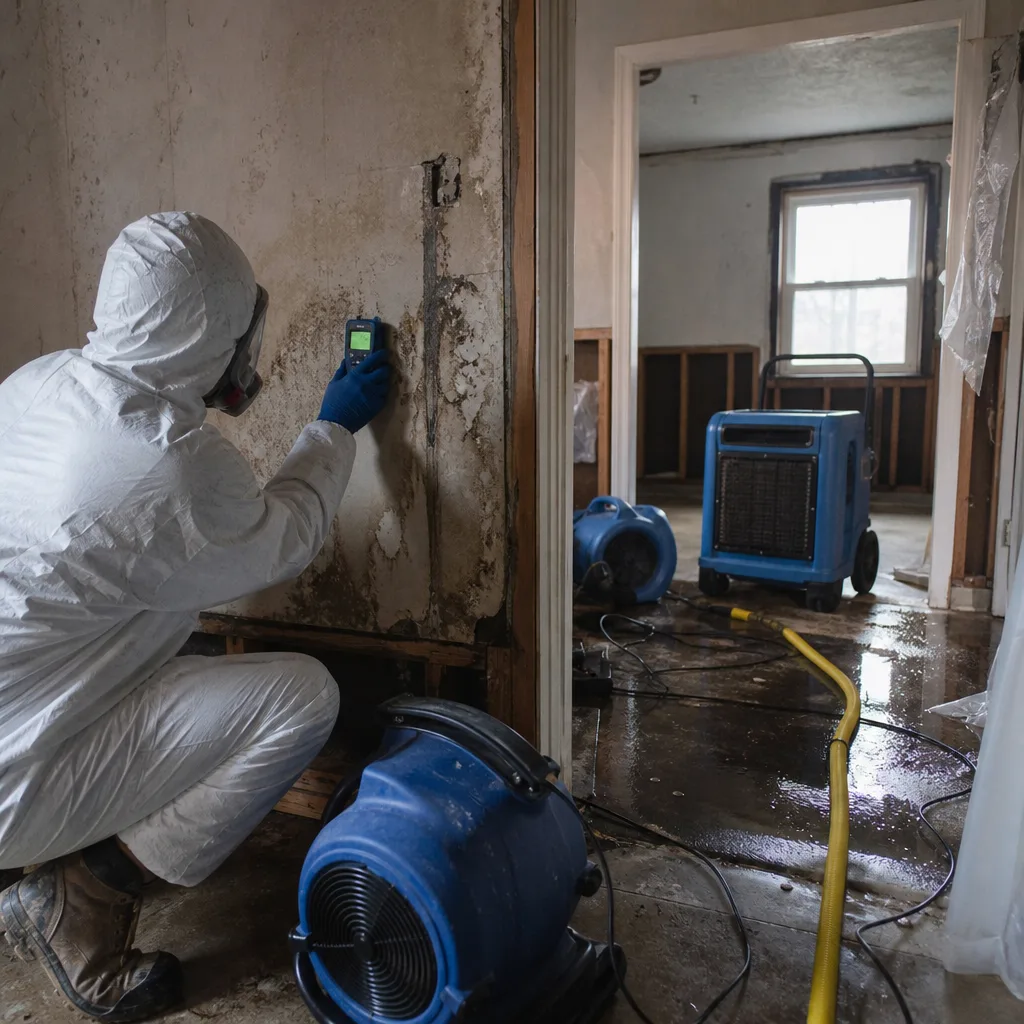 Before
 After
After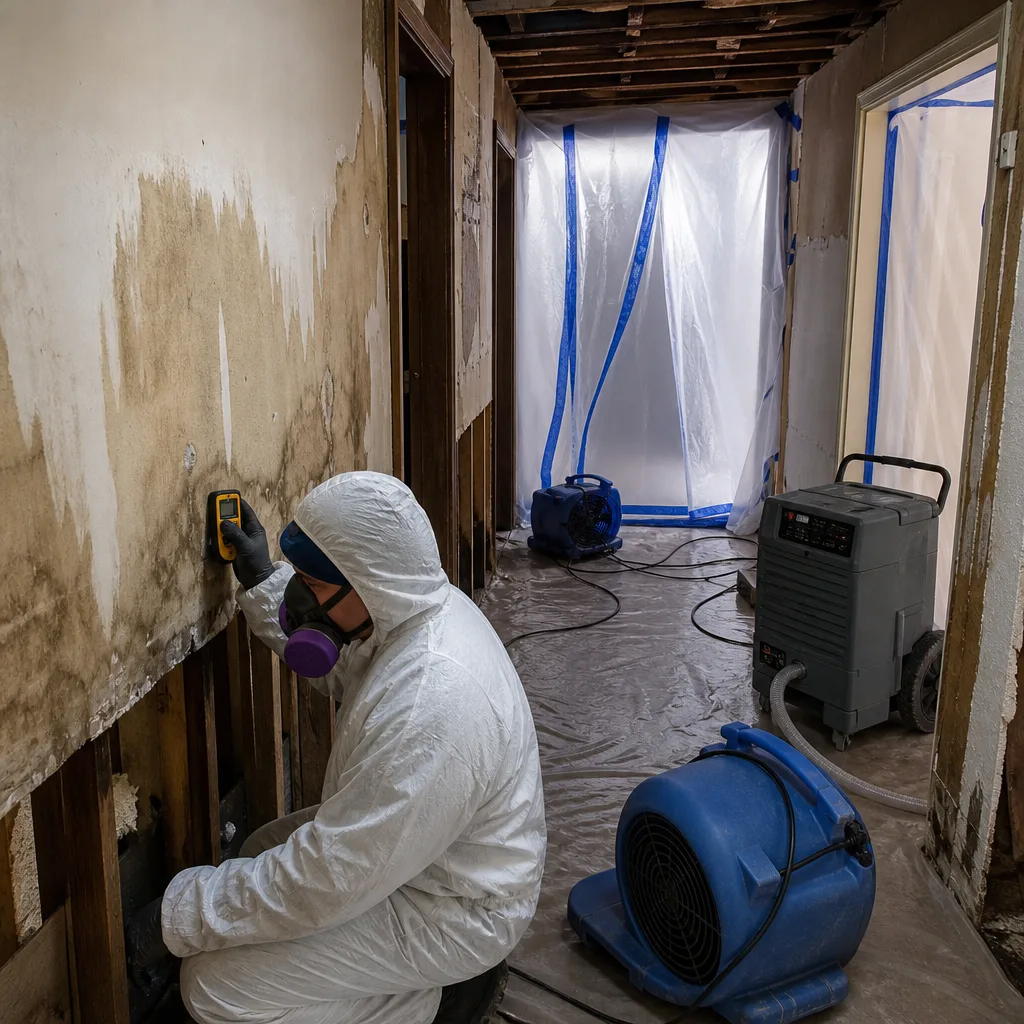 Before
 After
AfterDamage Restoration Cost Breakdown: The Teaneck Homeowner’s Reference for 2026
Most Teaneck homeowners discover what restoration actually costs the same week they discover their insurance deductible, and that’s a hard way to learn. The truth is that restoration pricing in Bergen County runs about 18 to 30 percent higher than national averages, driven by older housing stock, dense neighborhoods with shared walls, and labor rates that reflect the local cost of living. This guide breaks down what you’ll pay for water, fire, mold, and storm damage restoration in Teaneck in 2026, what drives those numbers up or down, which costs insurance typically covers, and where homeowners get overcharged. By the end, you’ll know exactly what questions to ask before anyone puts a fan in your living room.
Quick Answer
Damage restoration in Teaneck typically costs between $1,500 and $12,000 depending on the damage type and square footage affected, with water mitigation averaging $3,200, mold remediation $2,400, and fire restoration $8,700 for a typical single-family home. Most homeowners with standard policies pay only their deductible out of pocket, which in Teaneck averages $1,000 to $2,500. Getting a written, itemized scope before work starts is the single best way to avoid overpaying.
Table of Contents
- Water Damage Restoration Costs in Teaneck
- Mold Remediation Costs in Teaneck
- Fire and Smoke Damage Restoration Costs in Teaneck
- Sewage Cleanup Costs in Teaneck
- What Actually Drives Restoration Pricing in Teaneck
- How Insurance Coverage Affects What You Pay
- Teaneck-Specific Factors That Change the Bill
- Common Mistakes to Avoid
- When to Call a Professional
- Frequently Asked Questions
- The Bottom Line
Water Damage Restoration Costs in Teaneck
Water damage restoration in Teaneck typically runs $2,000 to $6,500 for a contained event affecting one or two rooms, and $8,000 to $20,000 when water travels through multiple floors or sits for more than 48 hours. The average claim we see in Teaneck lands around $3,200. The catch is that water is the one type of damage that gets worse by the hour, so the cost spread between “caught it early” and “found it after vacation” is wider than any other restoration category.
Here’s what that money actually buys, line by line:
- Water extraction: $400 to $1,800. Professional truck-mounted extraction removes hundreds of gallons that a shop vac can’t touch. In Teaneck basements, which sit on a high water table near the Hackensack River basin, this step usually trends toward the higher end.
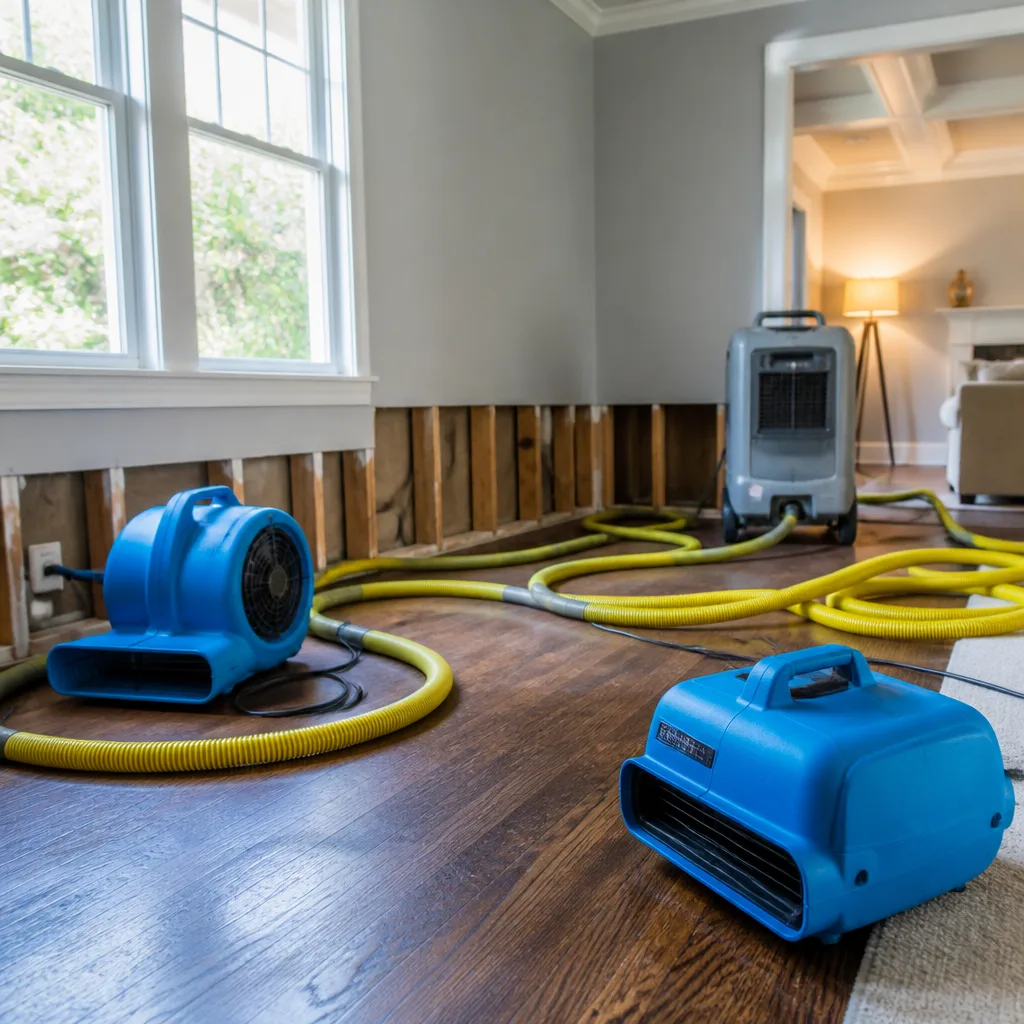
- Structural drying: $800 to $3,000. This is air movers, dehumidifiers, and injection drying for wall cavities. Dri-Eaz and Phoenix equipment runs on daily readings until the dry standard is met, typically 3 to 5 days in Teaneck’s humid summer months.
- Flooring removal and replacement: $500 to $4,500 depending on material. Hardwood in pre-war Teaneck homes often needs board-level replacement, while carpet in newer splits gets pulled and replaced wholesale.
- Drywall and trim work: $400 to $2,500 for cutting, removing, and patching. Water wicks up drywall at roughly one inch per hour, so a 12-hour soak means cutting 12 inches above the visible water line.
- Antimicrobial treatment and odor control: $200 to $800. This is non-negotiable after any standing water event. It prevents the mold problem that follows the water problem.
One thing worth stating plainly: the line the water left on the wall is where we start. Restoration crews in Teaneck cut above that line, not at it, because drywall hides moisture in ways paint never shows. A homeowner who insists on cutting at the visible stain line saves $300 on demo and pays $3,000 for mold next spring.
Mold Remediation Costs in Teaneck
Mold remediation in Teaneck averages $2,400 for a contained area under 100 square feet, $4,500 for 100 to 300 square feet, and $8,000 to $15,000 when mold has colonized wall cavities, attics, or HVAC ductwork. These are 2025-2026 Bergen County rates, and they reflect New Jersey’s relatively strict remediation protocols for visible mold in occupied structures.
What most Teaneck homeowners don’t expect is that remediation is a two-part bill: removal, then moisture correction. Removing surface mold without fixing the moisture source is a wasted check. In our experience, about 40 percent of the mold jobs we quote in Teaneck have been “cleaned” once before by someone who sprayed and walked.
What a Mold Remediation Job Includes
- Containment: $300 to $900. Sealed plastic barriers and negative air pressure keep spores from spreading to unaffected rooms while work happens.
- Removal: $800 to $6,000. Affected drywall, insulation, and trim are removed and double-bagged. Hard surfaces get HEPA-vacuumed and wiped with antimicrobial treatment.
- Air scrubbing: $200 to $600 per day. HEPA air scrubbers run throughout the job and for 24 hours after. This is the step cheap contractors skip.
- Source correction: $300 to $2,500. Fixing the leak, condensation, or drainage issue that fed the mold. Without it, mold returns within 6 to 12 months.
- Rebuild: $500 to $4,000. New drywall, insulation, paint. Some companies hand this phase to a different crew. Floodline Restoration Co. home keeps the same certified team from first containment to final coat of paint.
Fire and Smoke Damage Restoration Costs in Teaneck
Fire restoration runs higher than any other category, and Teaneck’s housing mix explains a lot of that. The township’s stock includes homes built from the 1920s through the 1970s, with plaster walls, balloon framing, and finished attics that let smoke travel in ways drywall-era houses don’t. A kitchen fire contained to one room might cost $6,000 to $15,000. A whole-house smoke loss from a furnace puffback usually lands between $4,000 and $9,000. Full fire rebuilds with structural work run $30,000 to $80,000 or more.
The cost breakdown looks like this:
- Emergency board-up and tarping: $500 to $1,500. This protects the structure immediately after the fire, before insurance adjusters and restoration crews arrive.
- Soot and smoke residue cleanup: $1,500 to $6,000. Soot is acidic. Left on surfaces for more than 72 hours, it etches glass, stains paint permanently, and corrodes metal fixtures. In Teaneck, older homes with original woodwork and unpainted trim need gentler, more labor-intensive cleaning.
- Ozone or hydroxyl odor treatment: $500 to $2,000. Smoke odor does not air out. Professional deodorization is required for any job where people will live in the house afterward.
- Content cleaning and pack-out: $1,000 to $8,000 depending on inventory. Furniture, clothing, books, and kitchenware get cleaned off-site. Some jobs keep contents on-site with professional content-cleaning stations.
- Structural repair and rebuild: $5,000 to $50,000. This is framing, drywall, flooring, electrical, and paint, scoped in writing and scheduled like a remodel, not a dispatch call.
We tell Teaneck homeowners one thing about fire work: the fire department’s water caused as much damage as the fire did. The mitigation bill covers both. Insurance knows this. Your adjuster expects to see a combined water-and-fire scope, not a smoke cleanup bill with water damage hidden in the footnotes.
Sewage Cleanup Costs in Teaneck
Sewage cleanup in Teaneck runs $2,800 to $8,500 for a typical basement backup, with the average around $4,200. This is one of the few restoration categories where nobody should attempt DIY work. Sewage water contains pathogens that require category 3 water protocols: full PPE for technicians, containment, removal of porous materials, and antimicrobial application throughout the affected area.
The cost is driven by what sewage touches:
- Contaminated material removal: $1,000 to $4,000. Carpet, pad, drywall, and any porous material touched by sewage gets removed. In Teaneck’s finished basements, this is often the largest line item.
- Sanitizing and deodorization: $600 to $1,800. Category 3 water requires professional-grade antimicrobials and repeated application. This is not a bleach-and-pray situation.
- Flooring replacement: $500 to $2,500. Concrete floors get sealed after cleaning. Finished floors get replaced.
- Plumbing repair: $300 to $2,000. Fixing the actual backup source, whether it’s a failed sump pump, a clogged main, or a municipal line issue.
Teaneck’s older neighborhoods, particularly around the Cedar Lane and West Englewood Avenue corridors, have combined storm and sanitary sewer sections. During heavy summer storms, municipal backups happen. If your backup traces to a township line, your insurer may pursue subrogation against the municipality. That’s their fight, not yours. What matters is that cleanup starts immediately because sewage damage worsens and the smell sets into porous surfaces within hours.
What Actually Drives Restoration Pricing in Teaneck
Restoration pricing is not a mystery. It’s a formula with about six variables, and once you understand them, you can read any estimate like a pro.
The Variables That Move the Number
- Category of water: Clean water (broken supply line) is cheapest. Gray water (washer overflow, sump failure) adds sanitizing costs. Black water (sewage, flood water from outside) is the most expensive because it requires full containment and hazardous material protocols.
- Square footage affected: Restoration pricing often runs per square foot. Water mitigation in Teaneck averages $3 to $7 per square foot. Mold remediation runs $10 to $30 per square foot. Fire restoration runs $15 to $40 per square foot depending on severity.
- Duration before mitigation starts: Water sitting for 24 hours causes one set of costs. Water sitting for 5 days causes a dramatically larger set. Every hour counts because drywall, flooring, and framing all move water differently at different saturation levels.
- Access and structural conditions: Tight crawlspaces, finished ceilings below leaks, plaster walls, and existing construction quirks all add labor hours. Teaneck’s older homes have more of these than newer builds.
- Content volume: A nearly empty basement costs less to dry than one storing 40 years of family possessions. Content pack-out and cleaning is a line item that surprises many homeowners.
- Time of year: Summer humidity in Teaneck slows drying and requires more equipment days. Winter freeze-thaw cycles create different challenges for exterior work and roof damage.
Here’s a practical price table for 2026 Teaneck rates:
| Damage Type | Small Job (under 100 sq ft) | Medium Job (100-300 sq ft) | Large Job (300+ sq ft) |
|---|---|---|---|
| Water Mitigation | $1,500 – $3,000 | $3,000 – $6,500 | $6,500 – $20,000 |
| Mold Remediation | $1,800 – $3,500 | $3,500 – $8,000 | $8,000 – $15,000 |
| Fire & Smoke | $4,000 – $8,000 | $8,000 – $20,000 | $20,000 – $80,000 |
| Sewage Cleanup | $2,800 – $4,500 | $4,500 – $8,500 | $8,500 – $15,000 |
| Storm Damage | $2,000 – $5,000 | $5,000 – $12,000 | $12,000 – $30,000 |
These are honest Bergen County numbers for 2026. A bid significantly under this table is likely a bait price, and one significantly over it deserves a line-by-line explanation before you sign anything.
How Insurance Coverage Affects What You Pay
Most Teaneck homeowners with standard homeowners insurance pay only their deductible for covered damage, which locally averages $1,000 to $2,500 depending on the policy. The practical question is not “what does restoration cost” but “what part of this restoration is my responsibility.” That answer lives in your policy’s declarations page.
What’s typically covered: sudden and accidental water damage (burst pipes, supply line failures, appliance leaks), fire and smoke damage, storm damage from wind and hail, and sewage backup if you carry the endorsement. Flood damage from rising groundwater or river overflow is not covered by homeowners insurance and requires a separate NFIP or private flood policy, which matters in certain Teaneck neighborhoods near the Hackensack River watershed.
What’s frequently denied: long-term leaks that show gradual damage over months, mold that grew because water was not mitigated promptly, and maintenance failures like a sump pump that failed because it was 20 years old and never serviced. Our crews have sat through enough adjuster conversations to know that photo documentation from day one is what separates a smooth claim from a contested one.
The insurance dynamic in Teaneck is standard: your adjuster writes a scope, your restoration company works against that scope, and any disagreement gets negotiated with documentation. Direct insurance billing, where the restoration company bills the carrier directly instead of making you float the balance, removes the worst part of the process. You never play messenger between the two parties. The carrier and the company work it out with your signed authorization.
One practical note for our Teaneck neighbors: the Senior & Veteran 5% Discount applies to the deductible gap too. If your deductible is $1,500 and you qualify, your out-of-pocket portion drops to $1,425 on covered work. It’s not a marketing hook. It’s a standing offer Curt Bowman put in place because he spent years watching older homeowners stretch to cover costs insurance should have handled.
Teaneck-Specific Factors That Change the Bill
Teaneck is not Paramus or Hackensack. The township’s particular mix of housing, geography, and bureaucracy creates restoration conditions that don’t exist 10 minutes down Route 4. Here’s what changes your bill specifically because you’re in Teaneck.
Aging Housing Stock
Roughly half of Teaneck’s single-family homes were built before 1960. That means plaster walls, real hardwood floors, cast iron plumbing, and construction methods that respond differently to water than drywall and OSB. Plaster takes longer to dry than drywall but survives saturation better. Hardwood floors can often be saved with professional drying and board replacement instead of full tear-out, which is a $2,000 to $4,000 difference on a 200-square-foot living room.
High Water Table and Soil Conditions
Teaneck sits in the Hackensack River floodplain, and many basements in the township experience seasonal groundwater seepage through foundation walls, not through the floor. That changes the drying plan because groundwater is an ongoing source until it’s addressed with proper drainage or grading. A sump pump failure during a March thaw in Teaneck does not dry out the same way a supply-line break does, because the water table itself is part of the equation.
Permit Requirements
Teaneck’s building department requires permits for structural changes, which includes most fire rebuilds and any water restoration that involves replacing framing members. A restoration company that tells you permits are unnecessary is telling you something that will resurface when you sell the house. Licensed restoration contractors handle permit paperwork as part of the scope. Unlicensed ones leave it to you, which is how homeowners end up with unpermitted work and a title problem at closing.
Neighborhood Density
Many Teaneck neighborhoods feature homes built close together with shared driveways and narrow side yards. This affects equipment staging, access paths, and the logistics of getting air movers and dehumidifiers into a basement without tearing up the neighbor’s lawn. On the plus side, smaller lot sizes mean shorter hose runs and faster extraction setup, a small savings that shows up in the labor hours.
Climate and Seasonality
Teaneck’s July and August humidity routinely exceeds 70 percent, which extends dry times by 1 to 2 days compared to winter work. Winter brings freeze-thaw pipe bursts, typically in exterior walls and unheated crawlspaces. Local restoration crews plan equipment runs around Bergen County weather, and so should your expectations for how long drying takes.
Common Mistakes to Avoid
- Waiting to call because it’s “not that bad.” Water damage doubles in cost roughly every 48 hours it goes unmitigated. A $1,500 extraction on day one becomes a $4,000 mold and structural job by day five. Teaneck’s humid summers compress that timeline even further.
- Accepting a bid without an itemized written scope. Any legitimate restoration company will give you a written, line-item scope before starting work. Verbal estimates are how homeowners end up with surprise charges after the job. Get it in writing, every time.
- Hiring based on price alone. The restoration trade has a known overselling problem, and the flip side is underselling: a low bid that skips containment, skips daily moisture readings, or skips antimicrobial treatment. In Teaneck, where mold follows water like dawn follows night, those skips cost more than the savings.
- Not documenting everything on day one. Photos of the damage, photos of everything touched by water, photos before anything gets moved. Your insurance adjuster will not remember what your basement looked like before the crew arrived. You will not either. Document it.
- Assuming flood insurance covers everything. Flood insurance covers rising water. Homeowners insurance covers sudden pipe bursts. Neither covers a sump pump that failed from neglect. Know your policy before you need it.
- Ignoring the source of the problem. Any restoration that doesn’t fix the underlying leak, drainage issue, or plumbing failure is scheduled to repeat. In Teaneck, with a high water table and seasonal groundwater, this matters more than in most places.
- Letting the restoration company and your insurance carrier argue through you. Direct insurance billing exists so you don’t carry that load. If a restoration company expects you to relay messages between them and your adjuster, you hired the wrong company.
When to Call a Professional
Call a professional restoration company the moment you notice: standing water in any amount that covers your shoe sole, a water stain that has grown since you first saw it, a musty smell you can’t locate (hidden mold), any smoke damage regardless of how small the fire looked, sewage of any kind, or water that has been sitting more than 24 hours.
This is not a task category where homeowner effort pays off. Running box fans from Home Depot for a week does not dry structural cavities, does not prevent mold, and does not satisfy any insurance requirement for professional mitigation. One thing we hear from Teaneck homeowners regularly: “I waited because I didn’t want to pay someone to do what I could do myself.” The bill after the fact is always larger than the professional estimate would have been on day one.
Floodline Restoration Co. offers free estimates in Teaneck. Our crew shows up, assesses the damage, and gives you a written scope with honest pricing. Call (551) 365-4026 and a live dispatcher answers, any hour, every day.
Frequently Asked Questions
Water damage restoration in Teaneck typically costs $2,000 to $6,500 for a contained one-to-two room event, with the average landing around $3,200. The final number depends on water category, square footage, how long the water sat, and what materials got wet. Call (551) 365-4026 for a free written estimate with exact pricing for your situation.
Insurance covers mold remediation only when the mold resulted from a covered water event that was mitigated promptly. Long-term leaks and mold that grew because water sat unaddressed are typically denied. Photo documentation from day one is the most reliable way to protect your mold claim.
Floodline Restoration Co. answers calls with a live dispatcher 24/7 and keeps crews staged in Bergen County, which means a certified team can typically reach most Teaneck addresses within 60 to 90 minutes of your call. Extraction often starts the same visit. Call (551) 365-4026 any time, day or night.
For category 1 clean water caught within a few hours, a careful homeowner with a wet-dry vacuum and dehumidifier can sometimes manage surface drying. For gray water, black water, any water sitting more than 24 hours, or any visible mold growth, professional remediation is required because structural cavities hold moisture invisible to the eye. The cost of skipping professional mitigation is almost always higher than the cost of doing it right.
The $89 Seasonal Tune-Up covers a full inspection of your sump pump, water heater, supply lines, and visible plumbing connections in the basement and crawlspace. It’s designed to catch the failures before they become floods. The same standing offer applies every season, for all Teaneck homeowners.
Floodline Restoration Co. handles direct insurance billing and works with your adjuster on your behalf, with your signed authorization. You never play messenger between us and the carrier. Photo documentation is submitted directly, and the written scope is designed to match what your policy covers. The Senior & Veteran 5% Discount applies to your out-of-pocket portion year-round.
The Bottom Line
Restoration costs in Teaneck run $1,500 to $20,000 depending on damage type and scale, with most homeowners paying only their deductible when insurance covers the claim. The variables that matter are water category, response speed, square footage, and whether the job is handled by one crew from start to finish or fragmented across subcontractors. Get a written scope before work starts. Document everything on day one. Fix the source, not just the symptom. And when you need someone in Teaneck, Floodline Restoration Co. answers with a live person any hour, stands behind every job with the 90-Day Done Right Promise in writing, and bills your carrier directly so you’re never in the middle. A square deal, in writing, from a local company that plans to be here in thirty years. Call (551) 365-4026 for a free estimate.
Written by Curt Bowman, Owner at Floodline Restoration Co., serving Teaneck since 2010.