
Last updated August 25, 2026
Free visual inspection and a written scope of work before any mitigation begins - photos, moisture readings, and drying logs go in your claim file
The scope we write is the scope we bill. Anything new gets shown to you, in writing, before we touch it.
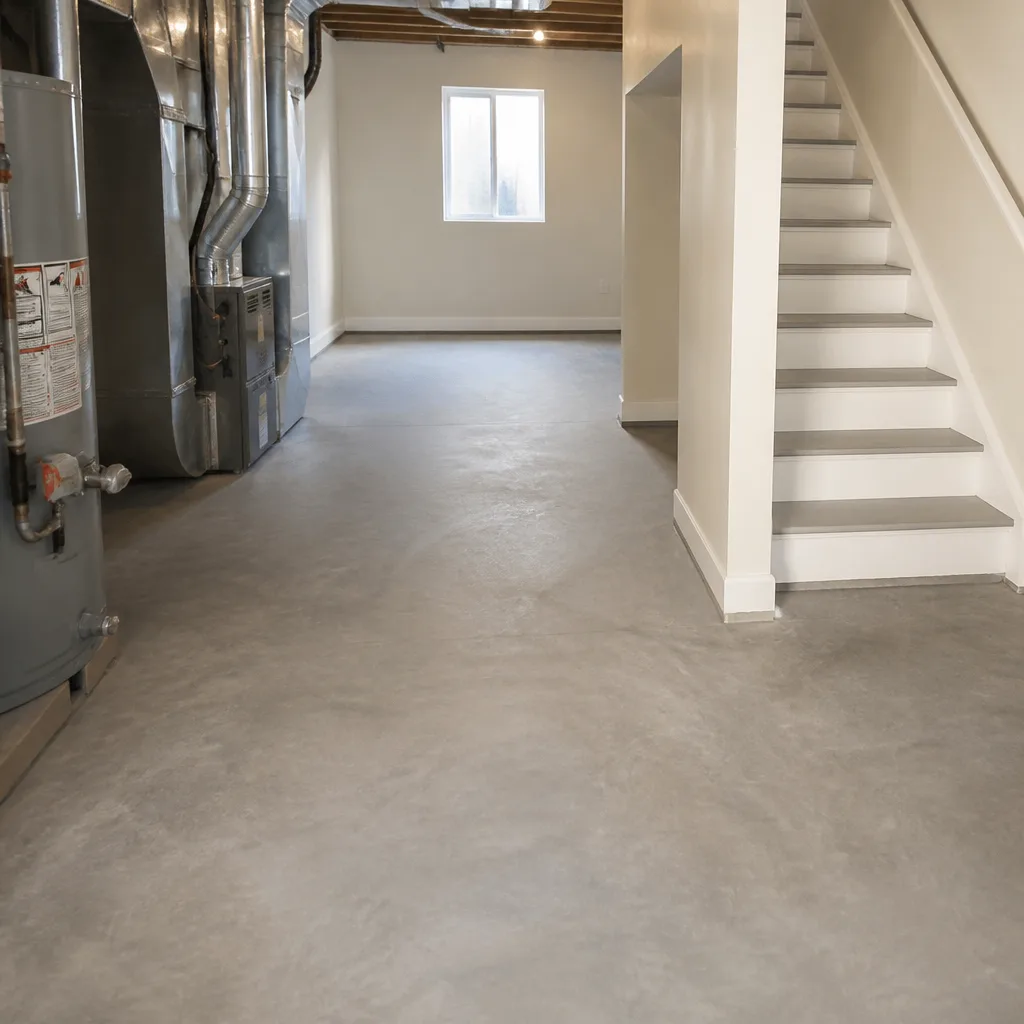

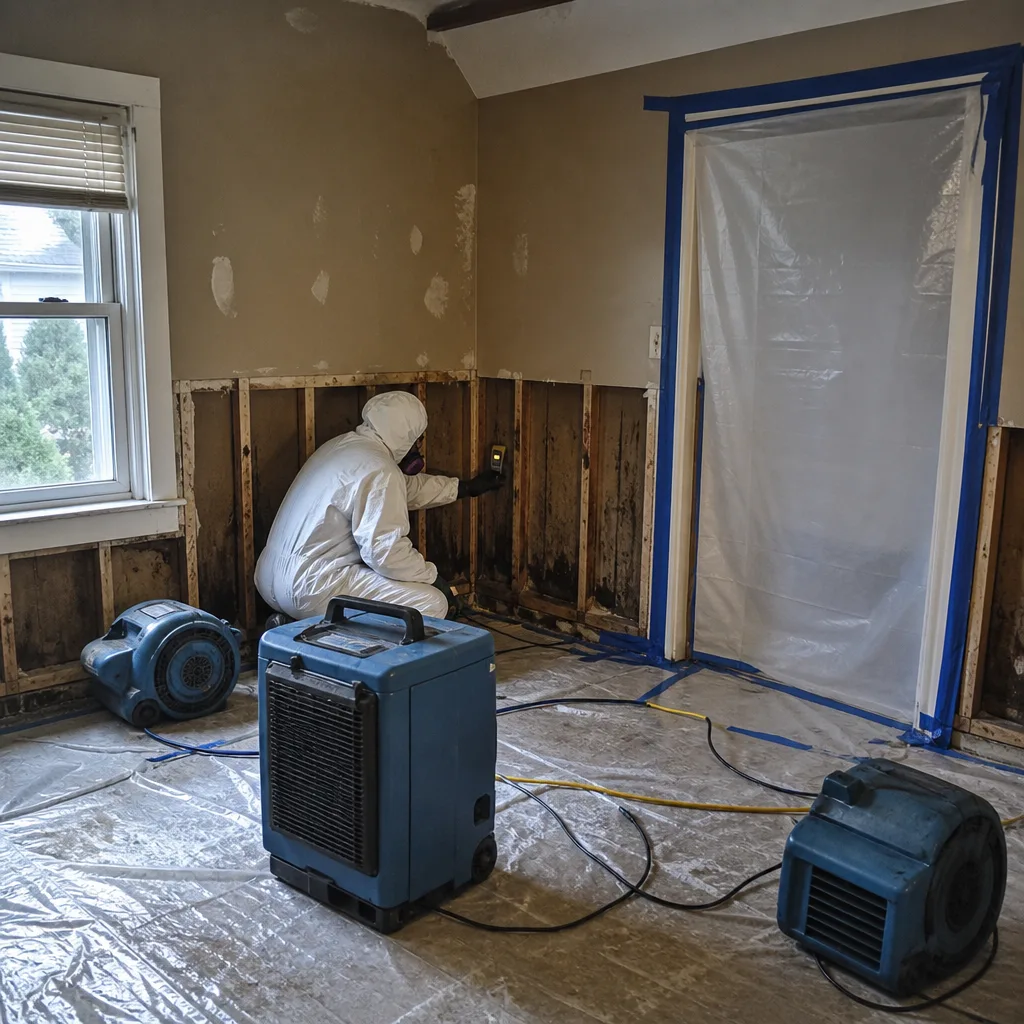 Before
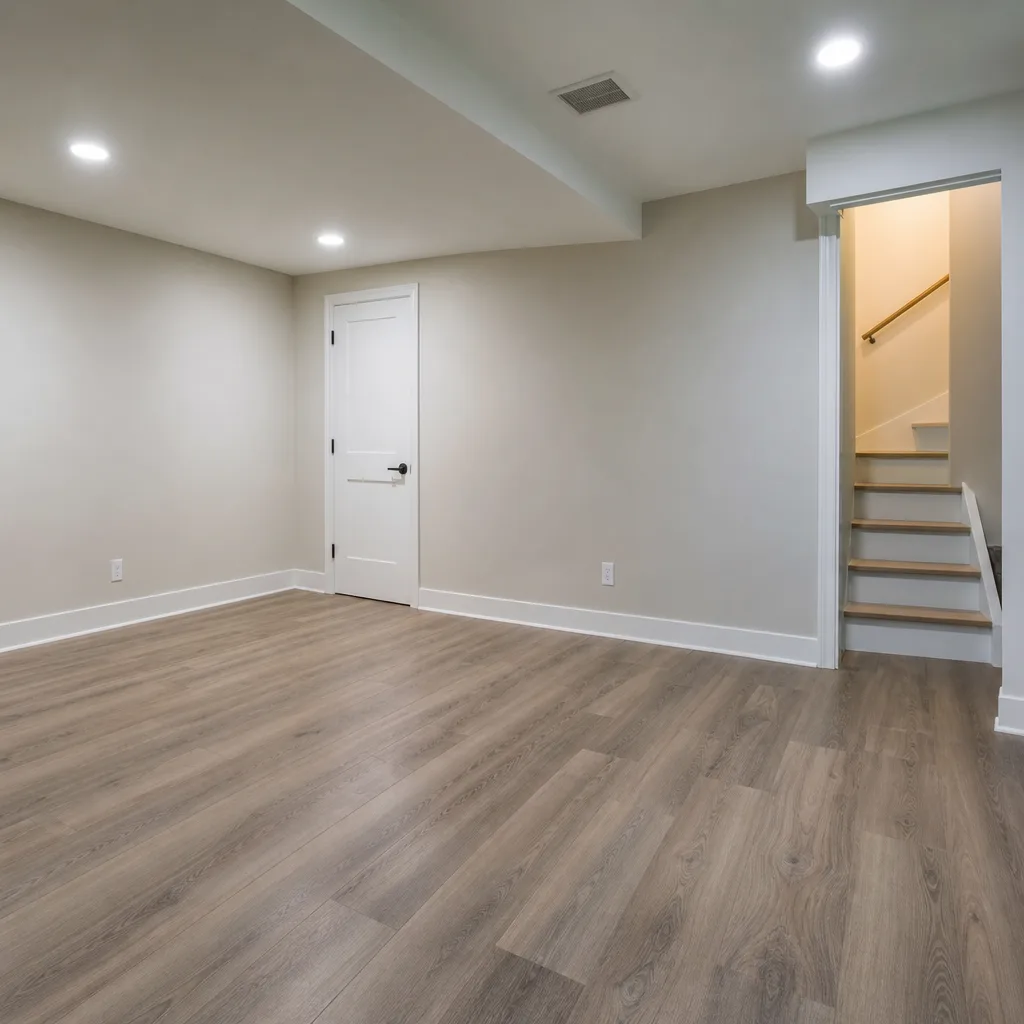 After
After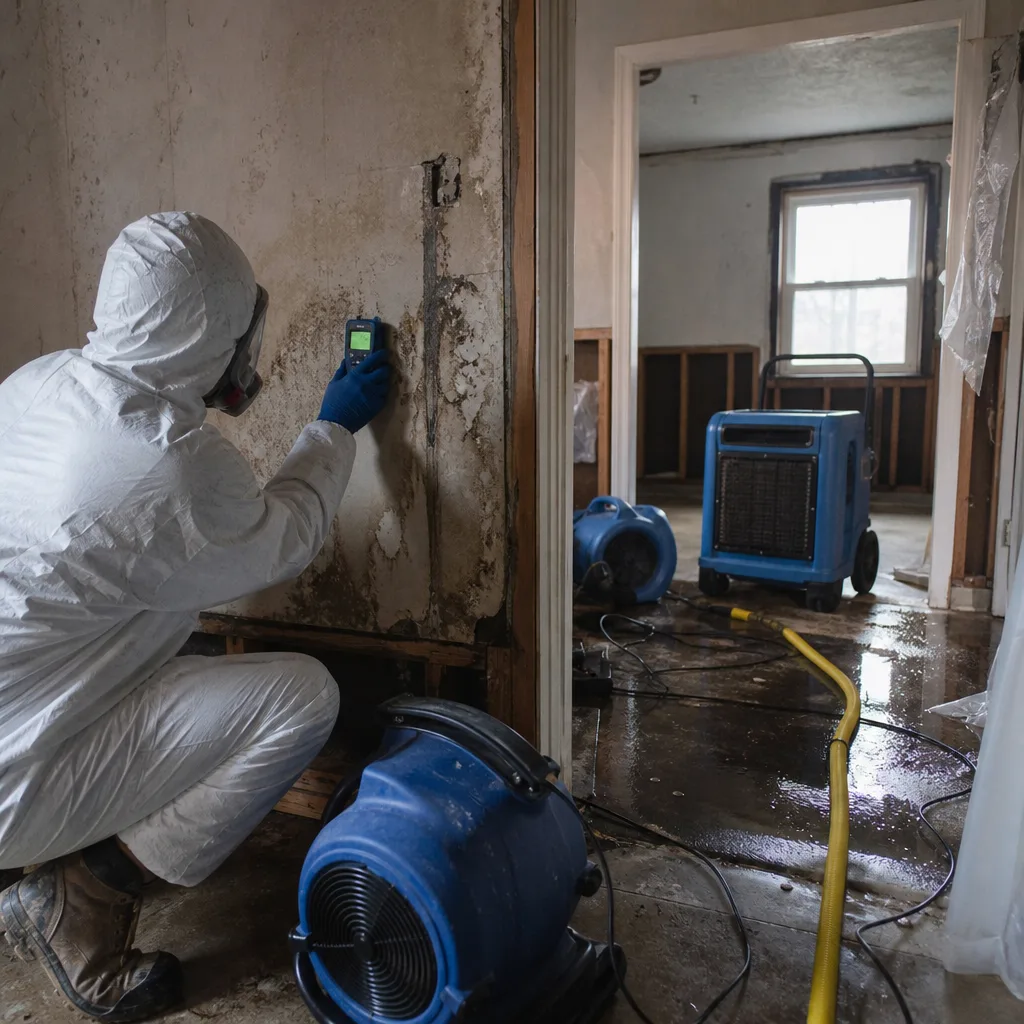 Before
 After
After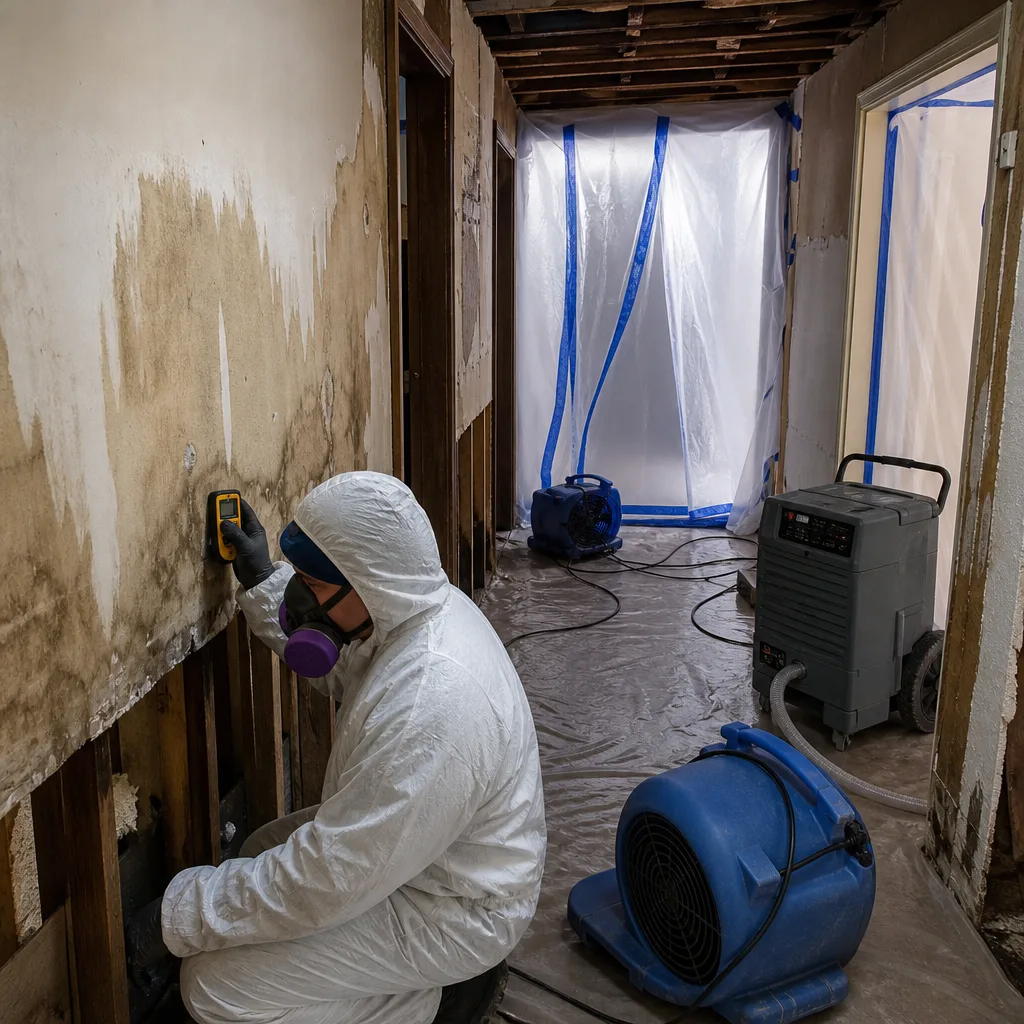 Before
 After
AfterHow to Hire a Damage Restoration Contractor in Teaneck: A Step-by-Step Guide
Here’s a number most Teaneck homeowners don’t think about until it’s too late: the first 48 hours after water enters a house determine whether you’ll need a $4,000 dry-out or a $40,000 rebuild. Mold spores colonize wet drywall within 24 to 48 hours. Structural wood begins cupping and warping. The clock is running before you’ve even found a contractor’s phone number. This guide exists so you don’t have to learn the hard way. We’ll walk you through exactly how to vet, hire, and work with a damage restoration contractor in Teaneck, based on 42 years of combined experience in this township’s homes, from the colonials near Votee Park to the split-levels off Queen Anne Road. No fluff. Just the steps that matter, in the order they matter.
Quick Answer
To hire a damage restoration contractor in Teaneck, verify they carry New Jersey state licensing and liability insurance, confirm 24/7 emergency response, ask who handles the insurance claim (you or them), get a written scope of work before any crew enters your home, and insist on documented moisture readings from day one through final dry-out. Floodline Restoration Co. answers dispatch calls live around the clock and walks every Teaneck homeowner through this exact process, with the full scope in writing before work begins.
Table of Contents
- Step 1: Stop the Damage Before You Call Anyone
- Step 2: Know What Kind of Restoration You Actually Need
- Step 3: Verify Licensing, Insurance, and Certifications
- Step 4: Ask the Seven Questions That Separate Pros from Pretenders
- Step 5: Understand the Insurance Claims Process Before Signing
- Step 6: Get the Scope in Writing, Down to the Line Items
- Step 7: Oversee the Drying Process Without Micromanaging
- Common Mistakes to Avoid
- When to Call a Professional
- Frequently Asked Questions
- The Bottom Line
Step 1: Stop the Damage Before You Call Anyone
You’ve found water where it doesn’t belong. The first contractor you need isn’t a contractor at all. It’s you, for the next ten minutes. Shut off the water at the main valve if you can locate it safely. Kill electricity to the affected area at the breaker panel. Move furniture, rugs, and anything absorbent out of the water’s path. These three actions take less time than finding a restoration company’s phone number, and they’ll save you thousands.
Then call. Not tomorrow. Not after your insurance agent’s office opens. Water damage in Teaneck homes moves fast because of how our houses are built. Many Teaneck homes date from the 1920s through the 1960s, before modern vapor barriers and drainage planes. Lath-and-plaster walls soak up water differently than modern drywall. Basement foundations in older sections of the township are often fieldstone or brick, not poured concrete. That means water travels farther, faster, and into places a layperson wouldn’t think to look.
A live dispatcher should answer at 2 a.m. Not a voicemail. Not an answering service that says someone will call you back in the morning. When you call Floodline Restoration Co. at (551) 365-4026, a real person picks up. A crew reaches your Teaneck home, sets up extraction equipment, and water is being pulled out of the structure that same visit. That’s the standard. Hold any company you call to it.
Step 2: Know What Kind of Restoration You Actually Need
Damage restoration isn’t one service. It’s a family of specialized trades, and hiring the wrong one wastes time and money. Here’s the plain-English breakdown for Teaneck homeowners:
- Water damage restoration: Extraction, structural drying, dehumidification, and moisture monitoring for Category 1 (clean) through Category 3 (sewage-contaminated) water. Most common in Teaneck basements after heavy rains or burst pipes.
- Mold remediation: Containment, air filtration, source removal, and antimicrobial treatment. Often follows water damage that sat too long or hid behind walls.
- Fire and smoke restoration: Soot removal from surfaces and ductwork, odor neutralization, and structural cleaning after a kitchen fire or furnace malfunction. Teaneck’s older housing stock means fires spread quickly through balloon-frame walls.
- Sewage cleanup: A specialized subset of water damage requiring full personal protective equipment, disinfection protocols, and disposal of porous materials under local health codes.
- Storm and disaster restoration: Fast mobilization after township-wide events. Teaneck sits on the Hackensack River’s east bank, and heavy nor’easters send water into low-lying basements near the river’s floodplain.
- Reconstruction: Rebuilding what was torn out. Drywall, flooring, cabinetry, painting. Some companies only do this. Some only do extraction. Floodline does both under one roof, so you never face a mid-job handoff.
Before you call, figure out which category you’re dealing with. It determines everything about who you hire. A company that only does fire restoration isn’t the right call for a sewage backup, and vice versa. If you’re unsure, describe what happened to the dispatcher and let them triage it. A good company will tell you honestly if they’re the right fit or if you need a different specialty.
Floodline Restoration Co. home offers all of these services, handled by the same certified crew from first response through final rebuild.
Step 3: Verify Licensing, Insurance, and Certifications
Every state requires contractors to carry licenses and insurance. New Jersey is no exception. But here’s what most Teaneck homeowners don’t know: verifying those credentials takes five minutes and eliminates 80% of the bad actors in this industry. Don’t take a contractor’s word for it. Ask for the documents.
Here’s the checklist:
- New Jersey Home Improvement Contractor registration. Any contractor doing residential work in the state must be registered with the New Jersey Division of Consumer Affairs. Ask for the registration number.
- Liability insurance. This covers your home if the crew causes damage. Get the carrier’s name and policy number, then verify it. A contractor without insurance is a contractor you cannot afford to hire.
- Workers’ compensation coverage. If a technician gets hurt on your property and the company doesn’t have comp coverage, your homeowner’s insurance pays. That’s not a position you want to be in.
- IICRC certification. The Institute of Inspection, Cleaning and Restoration Certification is the industry body that sets standards for water damage restoration (S500), mold remediation (S520), and fire and smoke restoration (S740). A company whose technicians carry IICRC credentials has demonstrated they know the standards.
- EPA lead-safe certification. Many Teaneck homes predate 1978. Any renovation disturbing painted surfaces in a pre-1978 home requires EPA’s Renovation, Repair and Painting (RRP) certification. If reconstruction is part of your job and your house was built before 1978, this matters.
Floodline Restoration Co. technicians are background-checked, uniformed, and certified to IICRC, RIA, and IFA standards. We carry full liability and workers’ comp coverage. If you call and ask for proof, we’ll show it. Any contractor who hesitates or gets defensive about showing credentials is failing the test you should be giving them.
Step 4: Ask the Seven Questions That Separate Pros from Pretenders
A restoration contractor walks into your Teaneck living room. You have about ten minutes to figure out whether this person should touch your house. Here are the seven questions we’d ask if we were hiring someone, based on four decades of watching the good, the bad, and the ugly in this industry.
- “Who will actually be doing the work?” You want a company with trained, employed technicians, not day laborers picked up from a corner. Floodline sends background-checked, uniformed technicians on every job. The same crew that reads the moisture map on day one handles daily readings and rebuilds what needs rebuilding.
- “Who handles my insurance claim?” The answer should be “we do.” If a contractor tells you to work it out with your adjuster and get back to them, you’ve just inherited a second job. Direct insurance billing means the restoration company and the carrier talk to each other. You stay out of it.
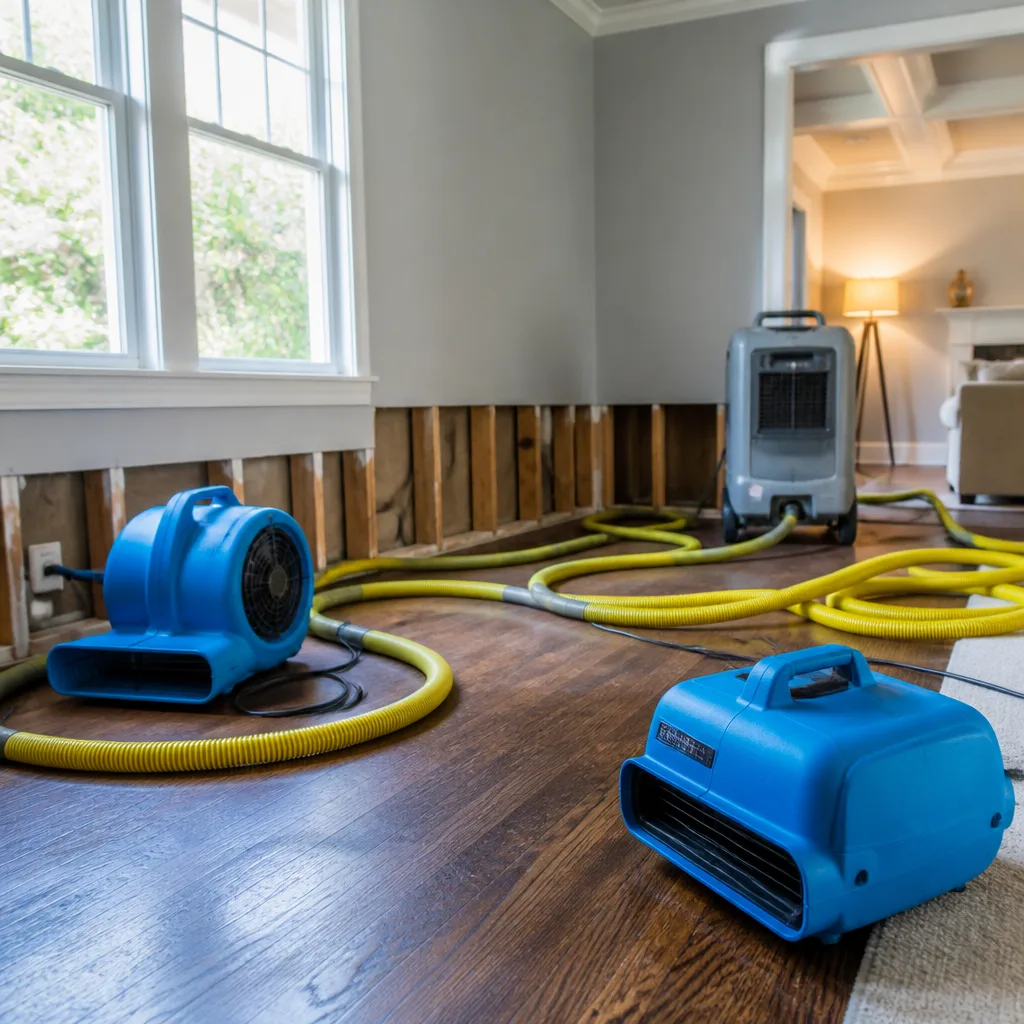
- “What equipment will you use?” Professional-grade equipment matters more than most homeowners realize. A box fan from Home Depot is not a drying plan. Floodline uses Dri-Eaz, Phoenix, XPOWER, B-Air, and Injectidry equipment, moisture-mapped from day one, with daily readings logged until the dry standard is met. If a contractor can’t name their equipment brands, walk away.
- “Can I see a written drying plan?” A real restoration company documents everything. How many air movers, where they’ll be placed, what the target moisture content is, and how many days the process should take. If you hear “we’ll just get it dry, don’t worry,” that’s not a plan. That’s a wish.
- “What’s your guarantee?” Ask this one and watch the body language. Anyone who shuffles or changes the subject has never been held accountable for a bad job. Floodline puts it in writing: the 90-Day Done Right Promise, known internally as the Keystone Standard. If it’s not done right, we make it right. No arguing. No paperwork battles.
- “Have you worked in Teaneck before?” Local experience matters because local housing stock matters. Teaneck’s home inventory is older than most nearby communities. A contractor who’s only worked in new-construction developments won’t know that our older homes hide water in ways modern construction doesn’t. Floodline has served Teaneck since 2010 and the surrounding Bergen County area for decades.
- “What’s the timeline from first call to first extraction?” The answer should be measured in hours, not days. If someone says they can come “next week,” you’re not talking to a restoration company. You’re talking to a handyman who happens to own a wet vac.
Step 5: Understand the Insurance Claims Process Before Signing
Most Teaneck homeowners carry homeowners insurance with water damage coverage. Whether your claim gets paid, and how much, depends heavily on how the restoration contractor documents the job and communicates with your carrier. This is where the industry’s worst reputation comes from: adjusters and restoration crews fighting over square footage while the homeowner’s walls stay wet.
Here’s the process done right:
- Documentation starts before work begins. A professional crew photographs everything: the water line on the wall, the damaged materials, the equipment placement. These photos become the backbone of your claim.
- Moisture readings are logged daily. Insurance companies want proof that the structure actually dried, not a contractor’s word. Daily moisture logs from professional-grade equipment satisfy that requirement. Floodline hands the log to both the homeowner and the carrier.
- The contractor communicates directly with the adjuster. You shouldn’t be relaying messages between two professionals. Direct insurance billing means Floodline works with your carrier, submits the documentation, and handles the claim coordination. You get the work done and the bill goes where it belongs.
- Supplemental damages get identified and documented. Sometimes the full extent of damage isn’t visible until walls come open. A good contractor documents that and communicates it to the carrier immediately, so coverage is determined before reconstruction begins, not after.
If you’re a Teaneck homeowner with a claim, ask the restoration company: “Will you communicate directly with my adjuster?” If the answer is anything other than an immediate yes, you’ve found a problem.
Step 6: Get the Scope in Writing, Down to the Line Items
This is the step that prevents 90% of contractor disputes. A written scope of work is not a formality. It’s the document that tells you exactly what will be done, what it will cost, and what’s included. Without it, “I thought that was included” becomes the most expensive sentence in the English language.
A legitimate scope of work includes:
- Every task, itemized. “Remove wet drywall from basement stairwell wall, 8 linear feet” is a scope. “Fix water damage” is not.
- Equipment type and count. How many air movers, how many dehumidifiers, where they’ll be placed, and for how long.
- Materials and finishes for reconstruction. If two rooms need new drywall, the scope says what grade, what thickness, and what finish level.
- Timeline. Start date, estimated completion date, and what happens if the timeline slips.
- Exclusions. What’s not included. This is as important as what is. If mold is discovered behind a wall and mold remediation isn’t in the scope, you need to know that before the wall comes down.
- Payment terms. When payments are due, what the deposit is, and how change orders are handled.
Floodline’s approach: no-hassle upfront pricing with direct insurance billing. The scope is agreed to in writing before work starts. No surprises on the bill. If additional work is needed, you approve it before it happens, not after it’s done.
Step 7: Oversee the Drying Process Without Micromanaging
You’ve hired the contractor. The crew is in. The equipment is running. Now what? You don’t need to stand over the technicians’ shoulders. But you do need to know what good looks like, so you can spot problems early.
Here’s what a professional drying operation looks like in a Teaneck home:
- Daily visits, not set-it-and-forget-it. Equipment should be checked, moved, and adjusted based on moisture readings. If a crew drops off equipment and you don’t see them for five days, that’s a red flag.
- Moisture readings you can see. A reputable company shows you the readings. Floodline logs them daily and hands the log to the homeowner and the carrier. The dry standard is a specific number, measured with a moisture meter, not a technician’s gut feeling.
- Equipment that runs properly. Air movers and dehumidifiers make noise. That’s normal. What’s not normal is equipment that’s off, unplugged, or clearly not running. If something looks broken or stopped, call the company.
- Progress you can feel. By day two or three, the air in the affected area should feel less humid. Materials should feel less damp. If nothing has changed in 72 hours, the drying plan isn’t working, and someone needs to adjust it.
Ask your contractor what their target moisture content is and what the readings have been. If they can answer with specific numbers, you’re in good hands. If they wave vaguely and say “it’s drying,” push harder.
Common Mistakes to Avoid
- Calling your insurance company before stopping the water. Ten minutes of stopping the water saves more money than any insurance policy. Shut it off first, then call the carrier, then call the restoration company.
- Hiring the first company that answers the phone. Speed matters, but five minutes of verification saves you from a bad contractor. Anyone can answer a phone. Few can answer with credentials.
- Choosing the cheapest quote. In restoration, the cheapest quote is usually the least complete work. A lower price almost always means missing steps: no containment, fewer air movers, no daily monitoring. That’s not saving money. That’s deferring it.
- Letting the contractor negotiate with your insurance company without documenting anything. If it’s not documented, it didn’t happen. Photos, moisture logs, written scopes. Documentation is your protection.
- Skipping mold testing after water damage. Water damage that sits for more than 48 hours develops mold. Testing confirms whether remediation is needed. Skipping it risks a larger problem months down the line, hidden inside Teaneck’s older walls.
- Waiting to schedule a free estimate. Water damage doesn’t self-resolve. The longer you wait, the more expensive it gets. Estimates are free. Waiting costs money.
- Signing anything without reading it. A written scope protects you. But only if you read it. Take the twenty minutes. You’d be surprised how many homeowners don’t.
When to Call a Professional
Some situations can be handled with a mop and a fan. Those are rare. Call a professional if any of the following apply: water covers more than a few square feet, water came from a sewage source, water has been sitting more than 24 hours, water entered through an appliance failure that may have caused hidden damage, you see visible mold growth, you smell a musty odor that doesn’t go away, or you had a fire of any size that produced smoke damage. If you have any doubt whatsoever, make the call. Floodline Restoration Co. offers free estimates in Teaneck - call (551) 365-4026 and a live person will walk you through what you’re looking at.
Frequently Asked Questions
Water damage restoration in Teaneck typically costs between $1,500 and $6,000 for common incidents like burst pipes, appliance overflows, and minor basement flooding. Category 3 sewage backups typically start around $4,000 due to PPE, disinfection, and disposal requirements. Full reconstruction after significant damage runs $15,000 to $50,000 or more depending on scope. The only way to know your number is a written estimate. Call (551) 365-4026 for a free one.
Within hours. Floodline Restoration Co. runs live dispatch 24/7. A real person answers the phone any time, day or night, and the goal is to reach your home and start extraction the same visit you call. Water damage waits for no one, and neither do we.
Most standard homeowner’s policies in Teaneck cover sudden and accidental water damage, such as burst pipes or appliance failures. Gradual leaks, sewer backups without a specific rider, and flood damage from the Hackensack River are typically not covered unless you carry additional endorsements. The best way to know is to let your restoration contractor coordinate directly with your carrier. Floodline handles the documentation and billing so you never have to play messenger.
The 90-Day Done Right Promise, the Keystone Standard at Floodline Restoration Co., means if the work isn’t done right, we make it right. That’s it. No fine print, no arguing, no paperwork battles. It’s tied to our K.E.Y.S. values code: Krafted right, Every time, Your home first, Standing behind it. The guarantee is given in writing before work begins.
For anything beyond a few square inches of visible surface mold on a non-porous surface, call a professional. Mold behind walls, under flooring, or in Teaneck’s older plaster and lath assemblies spreads invisibly. Surface cleaning doesn’t address the moisture source or the spore colony inside the wall cavity. Attempting DIY remediation without containment can also spread spores through your home’s HVAC system. If you see mold, call for a professional assessment before touching anything.
Ask for their physical address and how long they’ve served Bergen County. A truly local company answers with specifics: neighborhoods they’ve worked in, local permitting offices, relationships with local insurance adjusters. Floodline Restoration Co. has served Teaneck and the surrounding area since 2010, founded by Curt Bowman and built around a dispatch board, not a sales desk. We answer the phone with a person, and we’ll be here in thirty years to stand behind the work.
The Bottom Line
Hiring a damage restoration contractor in Teaneck comes down to six things: verification, documentation, communication, speed, scope, and follow-through. Verify licensing and insurance before work begins. Document everything from day one. Communicate directly between contractor and carrier. Get to the job fast, because water doesn’t wait. Put the full scope in writing. And hire someone who will still be here to stand behind the work months later. That’s the standard. Floodline Restoration Co. has met it for 42 years, with live dispatch around the clock, certified crews, professional-grade equipment, and the 90-Day Done Right Promise in writing. If you’re looking at water damage right now, call (551) 365-4026. A live person answers, and help is on the way.
Written by Curt Bowman, Owner at Floodline Restoration Co., serving Teaneck since 2010.