
Last updated August 25, 2026
Free visual inspection and a written scope of work before any mitigation begins - photos, moisture readings, and drying logs go in your claim file
The scope we write is the scope we bill. Anything new gets shown to you, in writing, before we touch it.


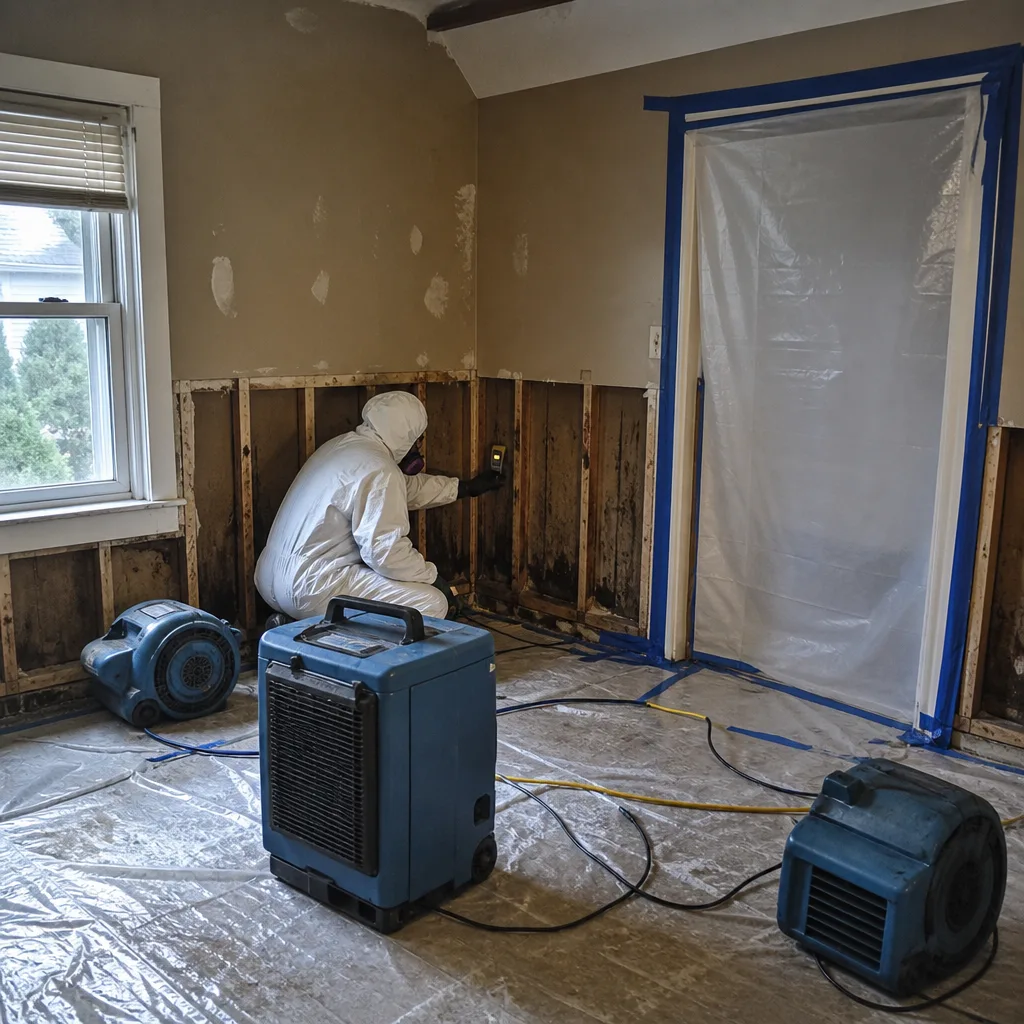 Before
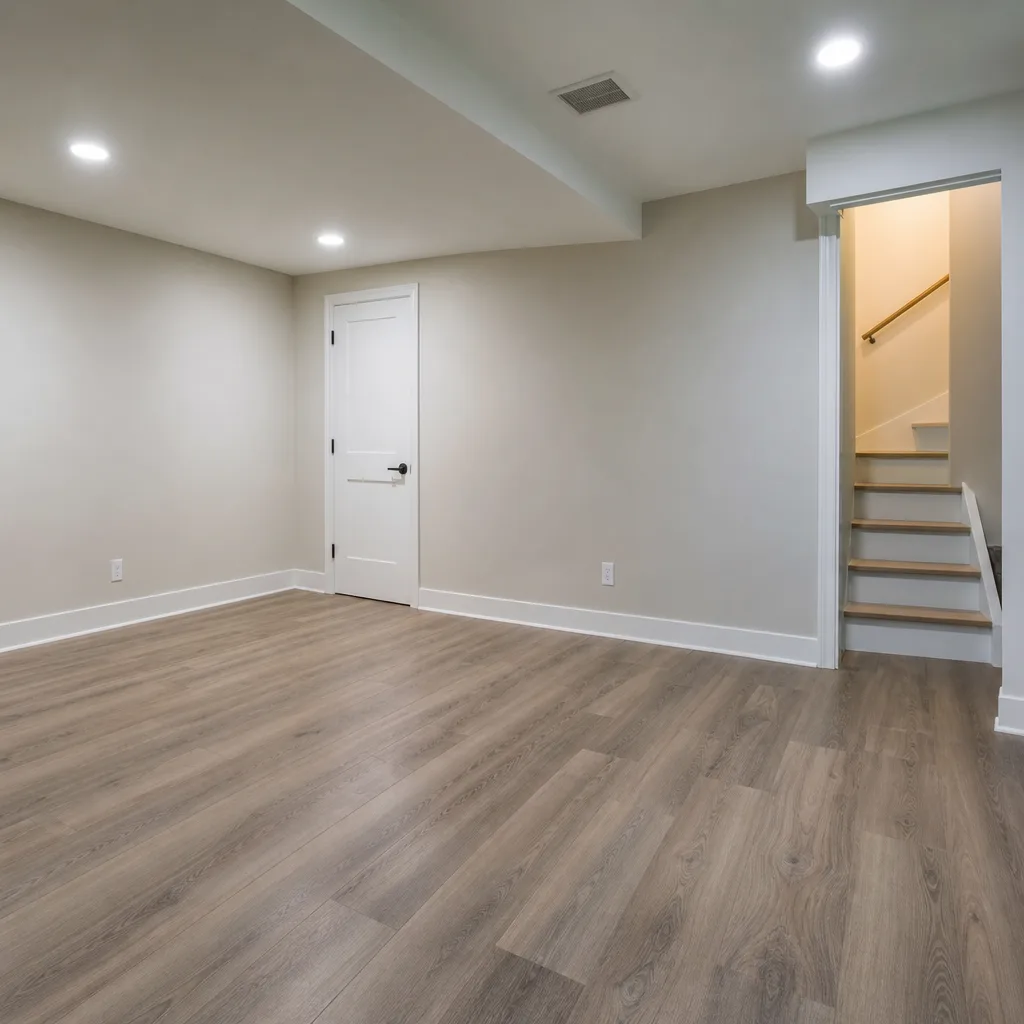 After
After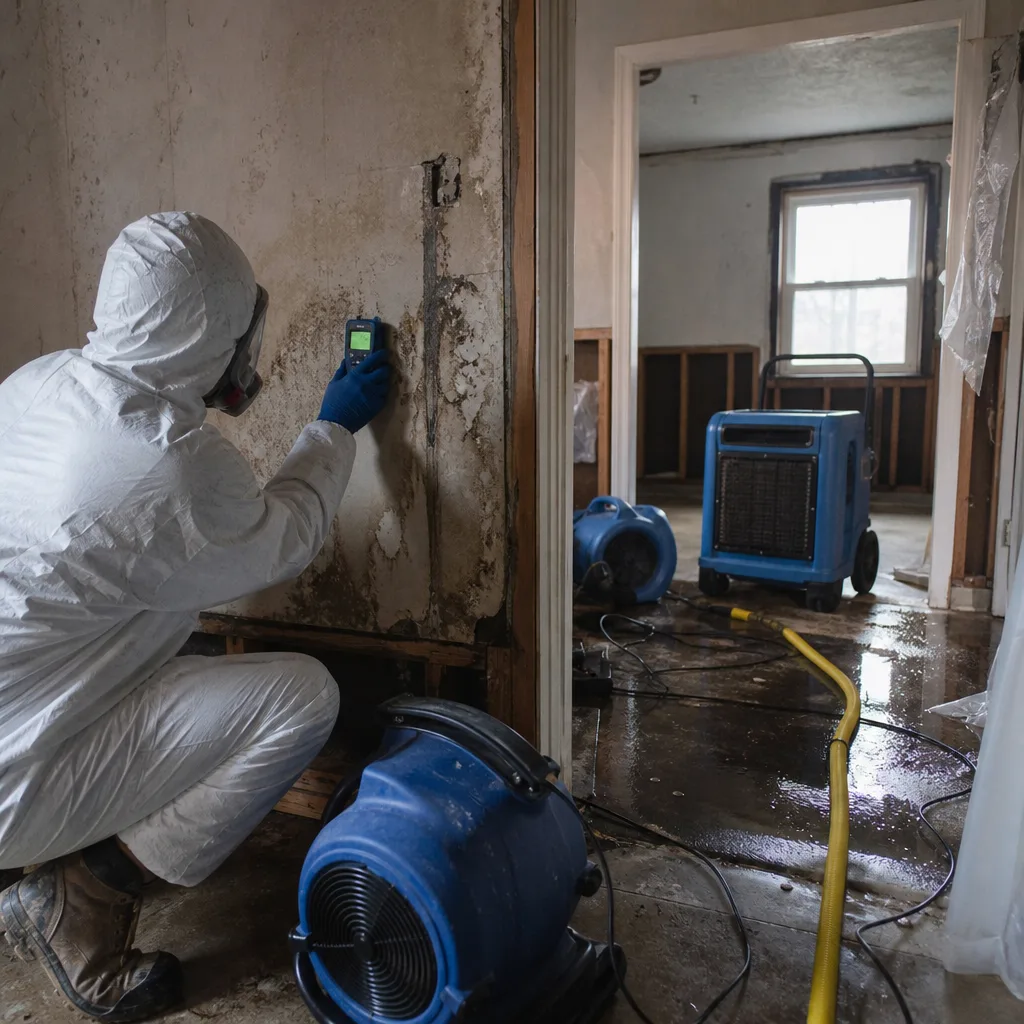 Before
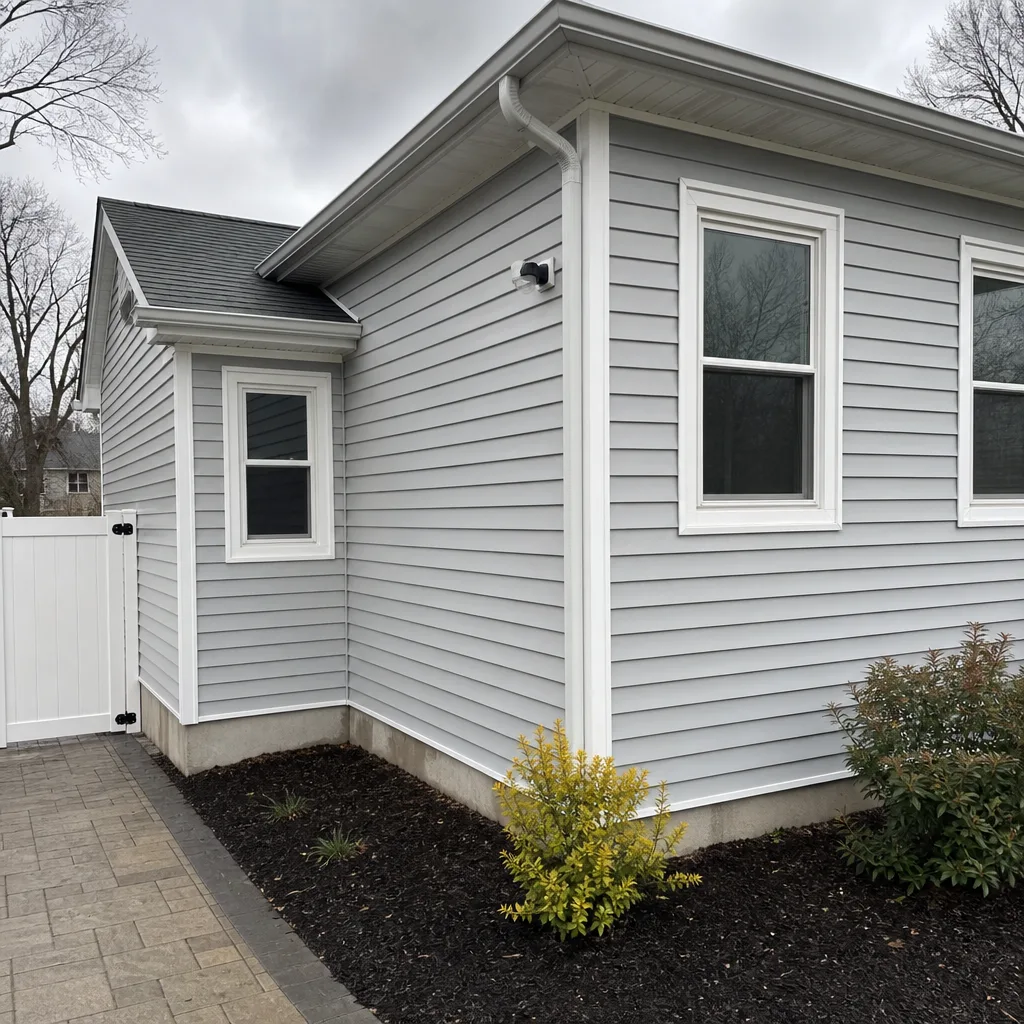 After
After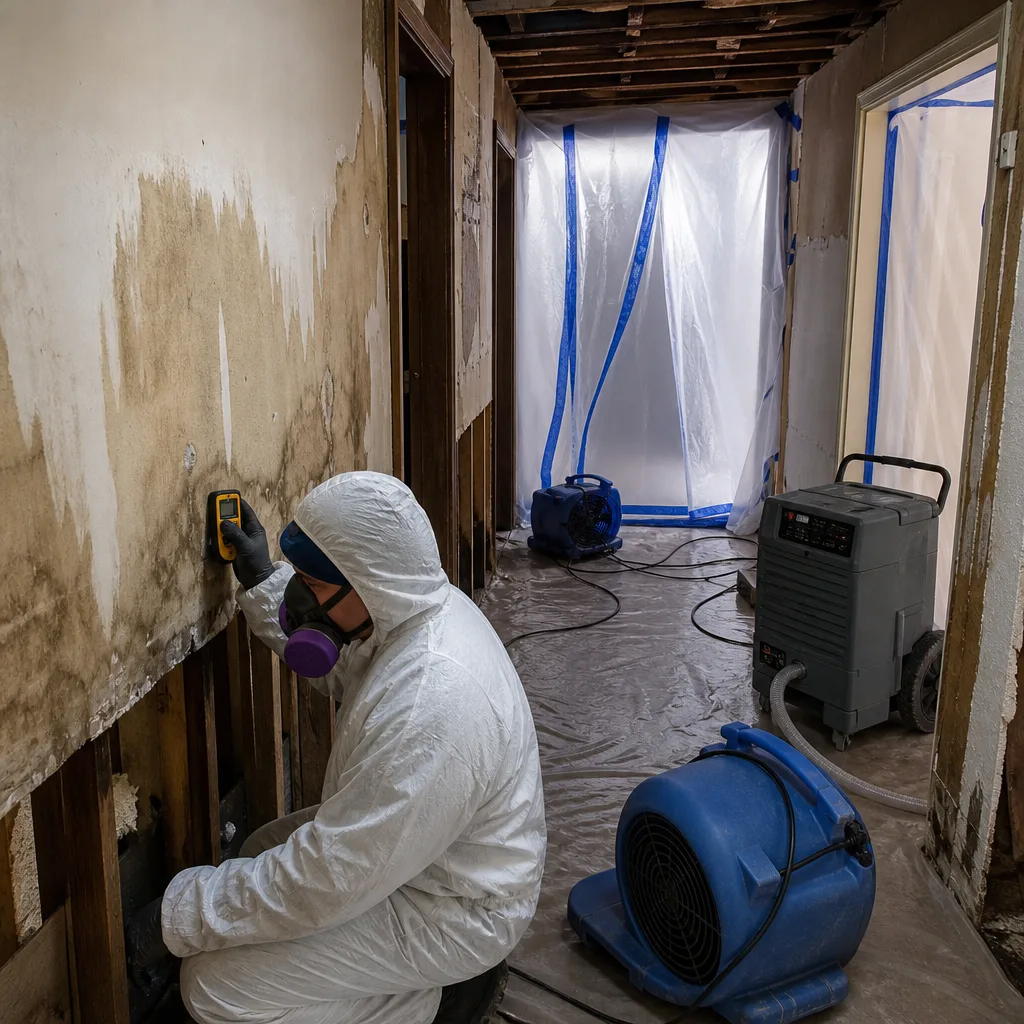 Before
 After
AfterThe Complete Guide to Damage Restoration in Teaneck
Most homeowners in Teaneck discover their first water damage problem the same way: a dark stain on the ceiling that was not there last week, or a damp patch of carpet that never quite dries. Here is the counterintuitive part. By the time that stain is visible, the moisture has usually been at work inside the wall or floor cavity for days, sometimes weeks. This guide explains how damage restoration actually works in Teaneck, what it costs, how insurance handles it, and the order of operations that separates a job done right from a job that has to be redone. You will learn what to do in the first hour, what to expect from a restoration crew, and how to avoid the five most expensive mistakes we see in this township every year.
Quick Answer
Damage restoration in Teaneck covers water extraction, drying, mold cleanup, fire and smoke recovery, sewage removal, and the rebuild that follows. The process starts with stopping the source and removing standing water, then moves through drying and moisture monitoring, then reconstruction. Costs vary widely by damage type, but a typical Teaneck water damage claim runs from $2,500 for a contained bathroom leak to $25,000+ for a finished basement flood. A certified restoration company handles the entire sequence, documents everything for your insurance carrier, and stands behind the work in writing.
Table of Contents
- Water Damage Restoration: The Teaneck Reality
- Mold Remediation: What Actually Works
- Fire and Smoke Damage: The Long Recovery
- Sewage and Biohazard Cleanup: When to Stand Back
- Reconstruction: Closing the Loop
- Insurance and Damage Restoration in Teaneck: How Billing Really Works
- Preventing Damage Before It Starts: A Teaneck Homeowner’s Checklist
Water Damage Restoration: The Teaneck Reality
Water damage in Teaneck follows predictable patterns. Homes built before 1970, which covers a large portion of the township’s housing stock, often have cast iron drain lines that corrode from the inside out. We regularly see slab leaks under Queen Anne Road homes and burst supply lines in the split-levels off Teaneck Road. The township’s clay-heavy soil also expands and contracts with freeze-thaw cycles, putting pressure on foundation walls and making basement seepage a year-round concern, not just a spring problem.
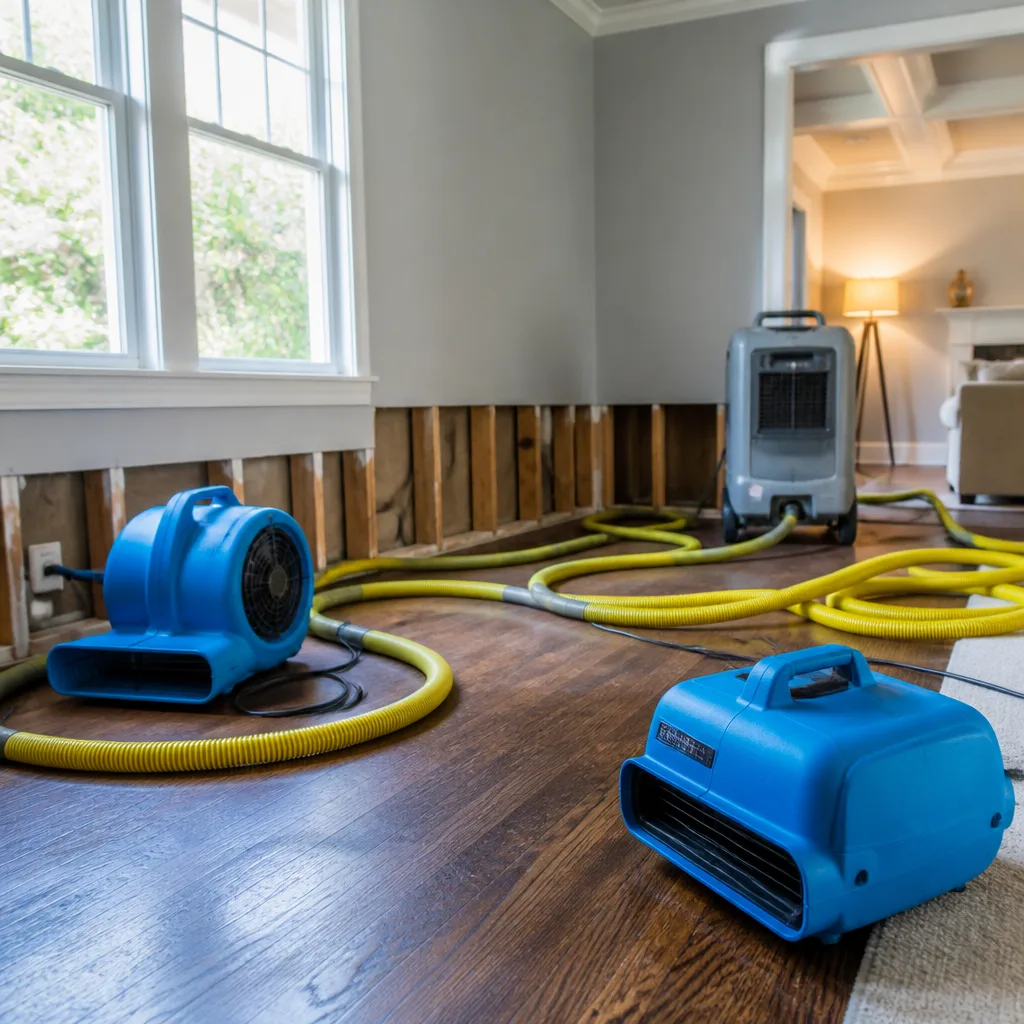
Water damage restoration follows a fixed sequence. First, the source is stopped: a valve is shut, a line is capped, a crack is sealed. Second, extraction removes standing water using truck-mounted or portable extraction units. Third, the drying phase begins. This is where the real work happens. Professional-grade equipment from Dri-Eaz and Phoenix moves air in a calculated pattern across wet surfaces while dehumidifiers pull moisture from the air. Technicians place moisture meters in walls, floors, and ceilings, then return daily to log readings until the structure hits the dry standard, typically 8 to 12 percent moisture content for wood.
The typical Teaneck water damage timeline looks like this:
- First hour: Call stops the water source or a plumber is dispatched. Restoration dry-out is scheduled.
- Day 1: Extraction, equipment placement, initial moisture readings, affected materials marked for removal.
- Days 2 to 4: Daily monitoring, humidity control, adjustments to air movers and dehumidifiers.
- Days 4 to 7: Drying complete on most Category 1 (clean water) jobs. Moisture log finalized.
- Week 2 onward: Reconstruction, if needed: drywall, flooring, paint, trim.
One detail that surprises Teaneck homeowners: flood cuts. Drywall that has absorbed water from a sewage or storm event must often be cut 12 to 18 inches above the visible water line, because moisture wicks upward through the gypsum core. Cutting only the stained portion guarantees hidden damp and mold regrowth behind the wall.
Mold Remediation: What Actually Works
Mold needs three things: moisture, a food source, and time. The food source is every piece of organic material in your home: drywall paper, wood studs, carpet backing, ceiling tiles. The time is measured in hours, not days. Mold colonies can establish within 24 to 48 hours of water exposure in the warm, humid months Teaneck gets from June through September. The moisture is the variable you can control. That is why proper mold remediation is primarily a drying problem, not a chemical problem.
Here is a fact that most homeowners do not know: bleach does not kill mold on porous surfaces. It changes the surface color, which makes the mold invisible, but the roots, or hyphae, survive inside the material. The mold regrows within weeks. Effective remediation removes the affected material entirely or dries it to the point where mold cannot survive. In practice, that means removing and replacing saturated drywall, carpet pad, and insulation, then treating structural wood with antimicrobial agents after drying.
Teaneck basements present a specific challenge. Many older homes on streets like DeGraw Avenue and Voorhees Street have fieldstone or cinder block foundations with no exterior waterproofing. Groundwater pushes through the walls during heavy rain, and the interior humidity never fully drops. A mold remediation job that does not address the moisture source is a temporary fix. We are certified to IICRC standards for mold remediation, which means containment, negative air pressure, HEPA filtration, and clearance testing, not just surface wiping.
The mold remediation sequence professionals follow looks like this:
- Assessment: Moisture mapping identifies all wet areas, including hidden pockets behind walls.
- Containment: Polyethylene barriers and negative air machines prevent spore spread during removal.
- Removal: Affected porous materials are cut out and bagged for disposal.
- Cleaning: Remaining surfaces are HEPA-vacuumed and treated with antimicrobial agents.
- Drying: The area is dried to below mold-sustaining moisture levels.
- Verification: Post-remediation moisture readings confirm the dry standard. Clearance testing confirms air quality.
Fire and Smoke Damage: The Long Recovery
A house fire in Teaneck is a neighborhood event. The trucks roll down Cedar Lane, neighbors gather, and by nightfall the fire is out and the real problem begins. Smoke does not stay in the room where the fire started. It travels through wall cavities, chases, and ductwork, depositing soot on surfaces in every room of the house, including rooms with doors that were closed throughout the incident.
Fire restoration follows a similar logic to water restoration but with more variables. Water from firefighting efforts often causes secondary damage that can be worse than the fire itself in areas untouched by flame. Soot is classified by type: dry soot from paper and wood, oily soot from burnt plastics and synthetics, and protein-based residue from kitchen fires. Each requires a different cleaning method. Using the wrong one can set the soot permanently into paint and fabric.
The restoration sequence for fire damage follows a strict order:
- Board-up and tarping: Securing the structure against weather and unauthorized entry.
- Water mitigation: Extracting firefighting water and drying the structure.
- Soot and odor removal: HEPA vacuuming, dry sponge cleaning, and hydroxyl or ozone treatment for smoke odor.
- Content cleaning: Inventorying and cleaning salvageable belongings, often at an offsite facility.
- Reconstruction: Structural repairs to damaged framing, drywall, electrical, and finishes.
One Teaneck-specific note: many of the township’s older homes have original wood trim, pocket doors, and plaster walls that are expensive to replicate. A restoration company that understands the value of these materials will make salvage decisions differently than one that sees everything as disposable.
Sewage and Biohazard Cleanup: When to Stand Back
Sewage backup is the most hazardous type of damage restoration, and it is more common in Teaneck than most homeowners realize. The township’s combined sewer system, like many older New Jersey municipalities, can overwhelm during heavy rain, sending wastewater back through floor drains in basements. Older homes with original clay sewer laterals also face tree root intrusion, which creates blockages that back up into the lowest point of the house.
Sewage is classified as Category 3 water: grossly contaminated. It contains bacteria, viruses, and parasites. Standing sewage is genuinely dangerous. The safety rule here is firm: do not enter a sewage-affected area without proper PPE, and no one should attempt sewage cleanup as a DIY project. The health risk is real, and the professionals doing this work wear full protective gear for a reason.
The cleanup protocol is more rigorous than for clean water. Affected drywall and carpet are removed and bagged. Hard surfaces are cleaned and disinfected. The area is dried, then treated again. Air scrubbers run throughout the process. Every item touched by sewage is either professionally cleaned or discarded. Cookware, food, and porous personal items are generally discarded by protocol, not cleaned.
Biohazard cleanup, including crime scene and unattended death cleanup, follows the same rigorous protocol but adds another layer: compassion. We have done this work in Teaneck, and the homeowners involved are often dealing with trauma on top of property damage. The job requires discretion, speed, and a level of professionalism that respects what the family is going through. It is not the kind of work that gets discussed at town council meetings, but it happens more often than people think.
Reconstruction: Closing the Loop
Here is where damage restoration in Teaneck often breaks down. A water damage company extracts and dries, then hands the homeowner a check and a list of contractors to call for the rebuild. The homeowner becomes the project manager, coordinating drywall, flooring, paint, and trim. Weeks pass. Costs balloon. The insurance carrier is difficult to reach. The original drying guarantee is voided because a new crew disrupted the stabilized environment.
Full-cycle restoration closes that loop. The same certified crew that extracted the water and logged the moisture readings is the crew that opens the walls, rebuilds them, and paints them. When we say full-cycle, we mean the entire sequence, from first extraction to finished rebuild. That includes the Floodline Restoration Co. home standard: every job backed by the 90-Day Done Right Promise in writing. If something is not done right, we make it right. No arguing, no paperwork battles. That is the Keystone Standard.
Reconstruction work is scoped, scheduled, and priced in writing, the way a remodel would be. The homeowner sees a written scope of work before anything starts. There are no surprise line items. The work includes structural repairs, drywall replacement, flooring installation, painting, trim, and finish carpentry. Where the insurance claim covers the work, we bill the carrier directly. The homeowner is never the messenger between Floodline and the insurance company.
Insurance and Damage Restoration in Teaneck: How Billing Really Works
Insurance is almost always in the room when damage happens, even if no one talks about it directly. The question homeowners ask most often is not “how much does this cost” but “will my insurance cover this.” The honest answer: most standard homeowner policies cover sudden and accidental water damage, fire, smoke, and wind damage. They do not cover gradual leaks that have been seeping for months, because that is classified as maintenance, not a covered loss. Sewage backup is typically covered only with a specific rider, which many Teaneck homeowners do not carry.
Direct insurance billing changes the dynamic. Instead of the homeowner paying out of pocket and waiting for reimbursement, the restoration company works directly with the carrier. This means the company documents the damage with photos, writes the scope of work in the language adjusters expect, and communicates with the adjuster throughout the job. The homeowner is copied on communication but is never the person chasing payment.
The second question is about the adjuster. “Who deals with my adjuster?” The answer is the restoration company. That is part of the service. Photo documentation of every phase, daily moisture logs, and a written scope of work all go directly to the carrier. When the adjuster visits, a restoration representative walks the property with them, pointing out damage the adjuster might otherwise miss. This is not about inflating claims. It is about making sure nothing is overlooked and the settlement reflects the true scope of the work.
Teaneck homeowners with older policies should check one specific item: water backup coverage. It is often an add-on costing $50 to $150 per year that many policies omit by default. Without it, a sewer backup into a finished basement can become a $20,000 out-of-pocket expense. The same applies to sump pump failure coverage. Many homeowners only discover these gaps after the water is already inside.
Preventing Damage Before It Starts: A Teaneck Homeowner’s Checklist
The best damage restoration in Teaneck is the job that never has to happen. Some prevention steps are cheap. Some are expensive. All of them are cheaper than the damage they prevent. Here is the checklist we give homeowners in this township:
- Replace washing machine hoses every 5 years. Braided stainless steel hoses fail far less often than rubber, and a burst washing machine hose is one of the most common causes of indoor flooding we see.
- Know where your water main shutoff is. In a burst pipe situation, the time between discovery and shutoff determines the extent of the damage. Every adult in the house should know how to turn off the water.
- Clean gutters in spring and fall. Clogged gutters spill water against the foundation, which is the leading cause of basement seepage in Teaneck’s older homes.
- Test the sump pump twice a year. Pour a bucket of water into the pit and watch it cycle. Check the backup battery. A dead sump pump during a spring storm is a finished basement flood waiting to happen.
- Inspect water heaters every year. A rusted water heater tank eventually fails catastrophically, releasing 40 to 75 gallons of water into the home.
- Add water backup coverage to the insurance policy. If the house has a finished basement, this is the single highest-value policy addition a Teaneck homeowner can make.
- Check supply lines under sinks twice a year. Slow drips at compression fittings can rot cabinet floors and wall cavities before they are ever visible.
These are not abstract suggestions. We have walked through Teaneck basements where a $15 washing machine hose caused $15,000 in damage, and others where a $150 sump pump battery would have prevented $30,000 in reconstruction. The math is not close.
Common Mistakes to Avoid
- Waiting to call. Water damage compounds by the hour. What starts as a contained leak becomes saturated drywall, then mold, then remediation that triples the original scope. Call the moment water is discovered.
- Drying with household fans. Box fans and open windows move air, but they do not control humidity. Without professional dehumidification, structural drying stalls, and hidden moisture feeds mold growth in wall cavities.
- Cutting only the visible stain. Water wicks upward and outward beyond the visible line. Removing only the stained drywall guarantees hidden damp and recurrance. Flood cuts exist for a reason.
- Trusting bleach for mold. Bleach masks mold on porous surfaces but does not kill the roots. The mold regrows within weeks, often more extensively than before.
- Signing with the first company that answers. A company that can be at the door in 20 minutes may not have IICRC-certified technicians or proper drying equipment. Verify certification and equipment brands before work begins.
- Not documenting the damage. Photos taken before cleanup begins are the foundation of an insurance claim. A restoration company should be documenting every phase, but homeowners should take their own photos as well.
- Splitting the job between companies. When one company dries and another rebuilds, the homeowner becomes the project manager. Responsibility fractures. The drying guarantee is voided. Keep the job whole.
When to Call a Professional
Call a professional the moment standing water is present, sewage is involved, or water has touched drywall, insulation, or finished flooring. The same applies to any fire, however small the burn area appears, because smoke damage extends far beyond the visible soot. Mold covering more than 10 square feet of a surface requires professional remediation with containment, whatever the hardware store says. For any of these situations in Teaneck, Floodline Restoration Co. offers free estimates. Call (551) 365-4026, any hour, any day. A live person will answer.
Frequently Asked Questions
Floodline Restoration Co. answers every call with a live dispatcher, 24 hours a day, seven days a week. In most Teaneck situations, a certified crew arrives the same day and extraction begins during that first visit. Call (551) 365-4026 to get a crew dispatched now.
Most standard homeowner policies cover sudden and accidental water damage, like a burst pipe or overflow, but exclude gradual leaks and maintenance issues. Sewage backup requires a specific rider that many policies omit. Floodline Restoration Co. bills the carrier directly and sends photo documentation and moisture logs to the adjuster throughout the job. Call (551) 365-4026 and we will help you sort out coverage.
For any water damage beyond a small, contained spill, full professional remediation is almost always cheaper in the long run. Hidden moisture leads to mold, which leads to a larger remediation scope. A professional moisture assessment tells you definitively what needs drying versus what needs removal. Estimates are free.
Water damage restoration typically runs from $2,500 for a contained leak to $25,000 or more for a finished basement flood. Mold remediation commonly runs $1,500 to $8,000 depending on the area affected. Fire restoration ranges from $5,000 for a small kitchen fire to $75,000+ for whole-house smoke and water damage. Every job is scoped in writing before work begins, with no surprises on the bill.
We do. Floodline Restoration Co. works directly with your insurance carrier throughout the entire job. We document every phase with photos, submit a written scope of work, and walk the property with the adjuster during their visit. You are copied on communication but never left chasing payment.
The 90-Day Done Right Promise, which we call the Keystone Standard, is a written guarantee on every job. If something is not done right within 90 days of completion, we make it right. No arguing, no paperwork battles. It is tied to our K.E.Y.S. values code: Krafted right, Every time, Your home first, Standing behind it. That guarantee has been part of every job since Curt Bowman founded this company.
Call (551) 365-4026 for an exact quote on any damage restoration work in Teaneck. Estimates are free, and a live person answers around the clock.
The Bottom Line
Damage restoration in Teaneck is a process with a fixed sequence: stop the source, extract the water, dry the structure, clean the contamination, rebuild the damage. Every step matters, and skipping one step creates a bigger problem at the next step. The company you choose should be certified, use professional-grade equipment like Dri-Eaz and Phoenix, document everything for insurance, and stand behind the work in writing. That is the square deal. That is the Keystone Standard. And that is what Floodline Restoration Co. has offered Teaneck homeowners since 2010.
Written by Curt Bowman, Owner at Floodline Restoration Co., serving Teaneck since 2010.